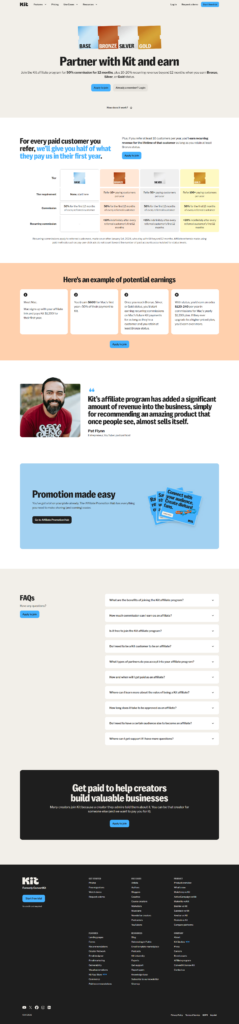
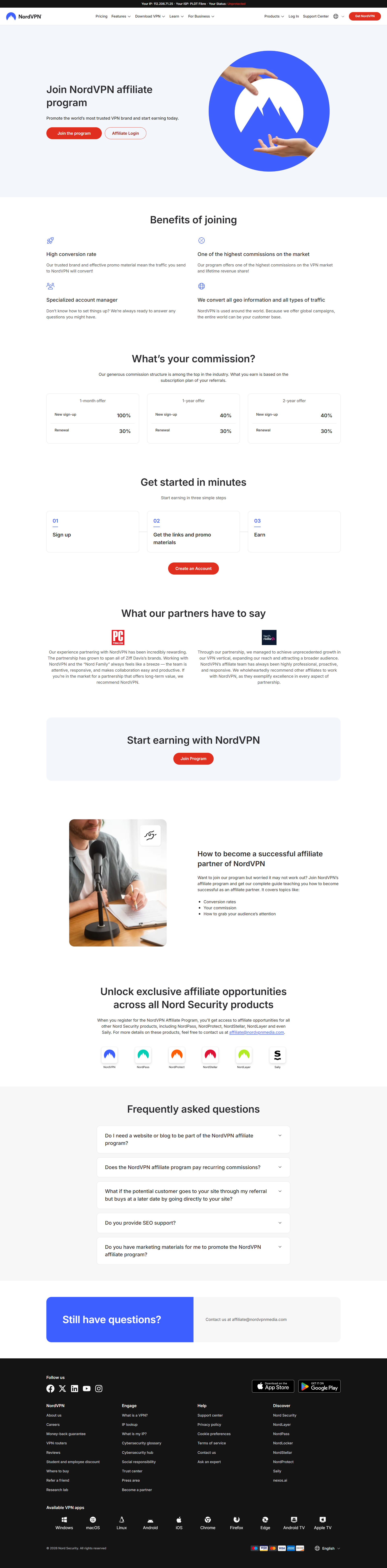
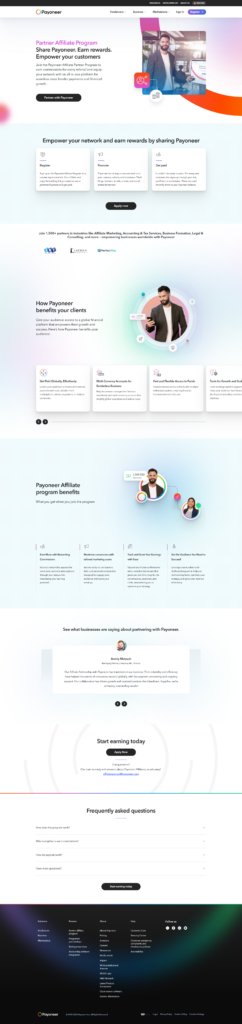
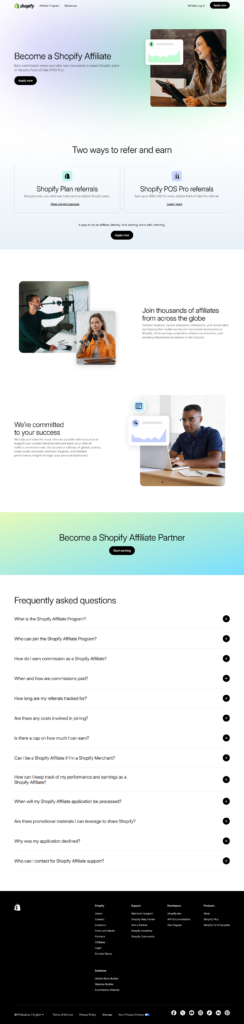
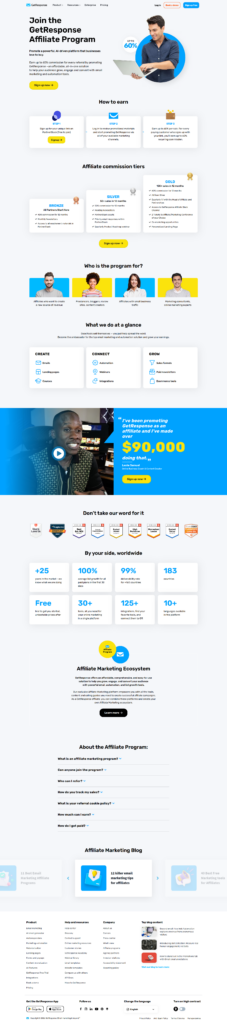
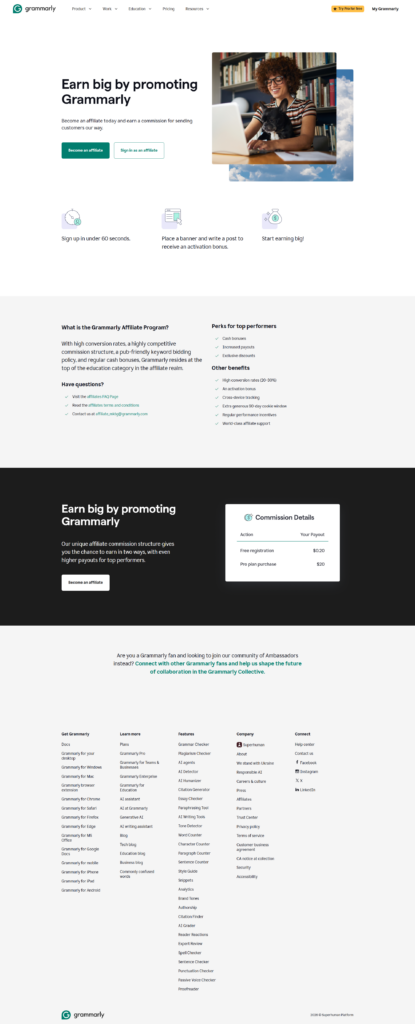
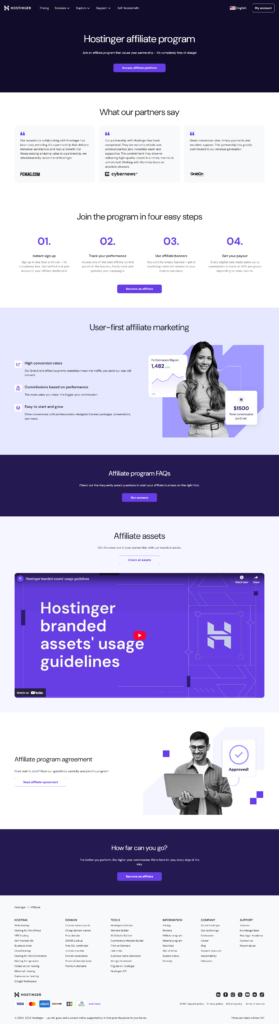
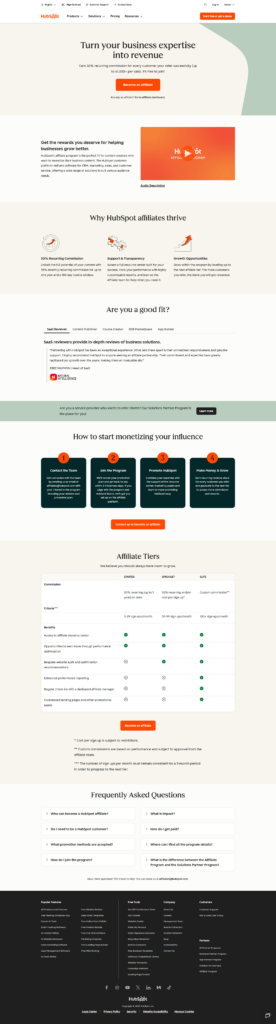
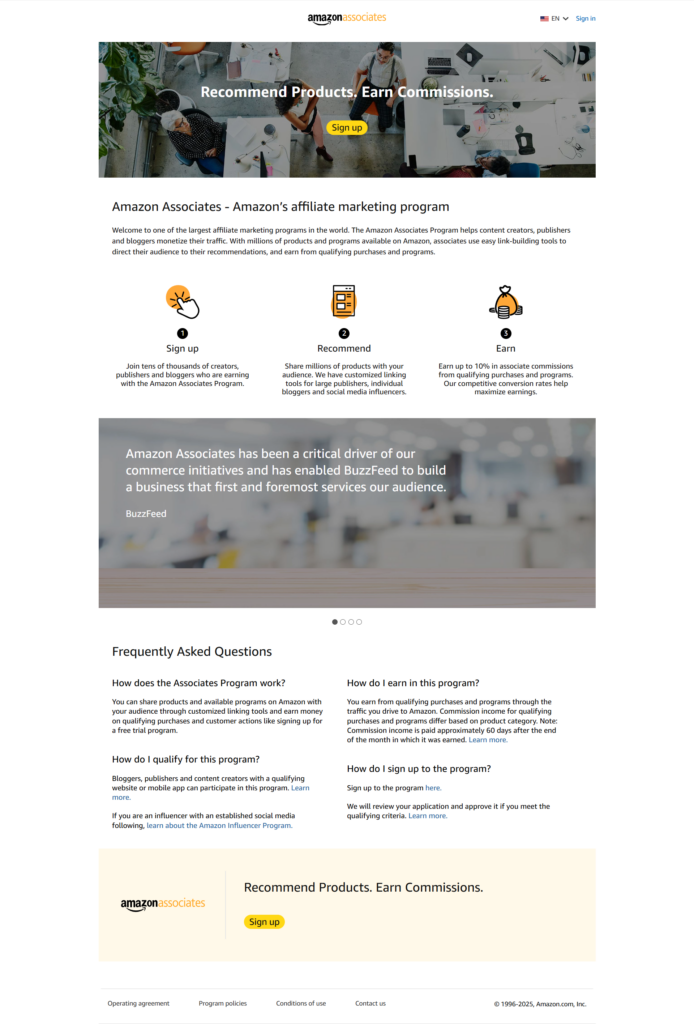
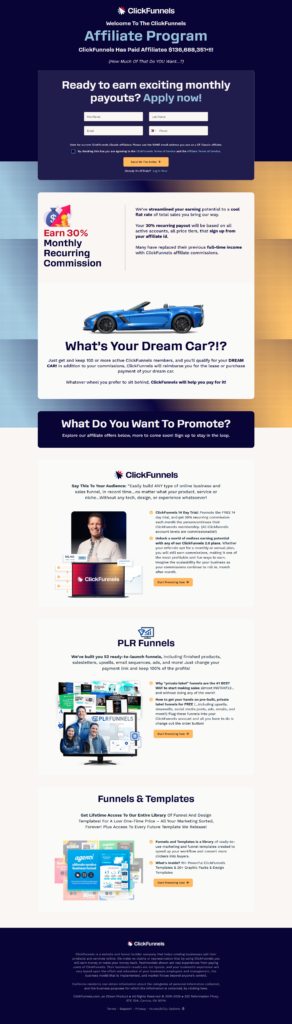
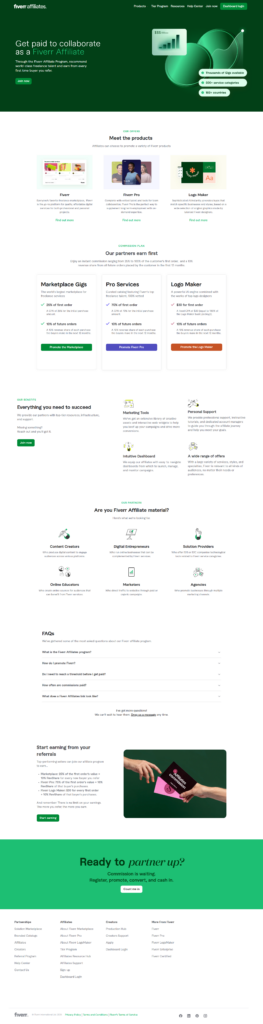
100+ Affiliate landing page examples that drive conversions

Affiliate landing pages work when they answer “is this for me” quickly. These examples show how to handle fit, pricing, and objections without writing a novel.

 Love These Landing Pages? You Can Make Yours Convert Even Better

Create beautiful, multi-step forms that convert with a zero-commitment free trial (no credit card required).


What is an affiliate landing page?

An affiliate landing page is a standalone web page created to promote a product or service through affiliate marketing. Its main goal is to convert visitors into leads or sales by directing them to take a specific action, such as clicking a referral link or signing up for an offer. 

Unlike regular web pages, affiliate landing pages remove distractions like navigation menus or unrelated content, keeping the focus on the promotion. 

These pages often feature clear messaging, persuasive copy, and strategic placement of affiliate links to maximize conversions and generate revenue for the affiliate.

Key elements of a high-converting affiliate landing page

Clear and Compelling Headline

The headline should immediately communicate the value of the offer. It must grab attention and highlight the main benefit for the visitor. Be specific about what the user will gain by taking the desired action. 

Concise, Persuasive Copy

Your copy should explain the benefits of the product or service in a way that resonates with your audience. Focus on outcomes and results rather than features. Use short paragraphs and bullet points for readability.

Prominent call-to-action (CTA)

Place a clear CTA button above the fold and repeat it strategically throughout the page. Use actionable text like “Claim Your Free Trial” or “Get Access Now.” Make the button visually distinct with contrasting colors that stand out from the page background.

Visual Elements

Images, videos, or product screenshots can help demonstrate the offer’s value and build trust. Ensure visuals are high-quality, relevant, and support the page’s goal.

Social Proof

Include reviews, testimonials, or user ratings to reinforce credibility. Show real feedback from people who have benefited from the product or service. Logos of trusted brands or media mentions can also increase confidence in your recommendation.

Simple, Focused Layout

Keep the page free from unnecessary distractions like navigation menus or multiple competing links. A clean, single-column layout often works best to guide users toward the affiliate link without confusion.

Offer Alignment with Audience Intent

The offer must closely match what the visitor is expecting when they land on the page. If traffic comes from a specific ad, keyword, or content angle, the messaging should reflect that intent exactly.

Mobile Responsiveness

Ensure your page and affiliate links work seamlessly on all devices. Many users will access the page via mobile, so responsiveness is essential to capture conversions.

Urgency and Scarcity

Limited-time offers, countdown timers, or limited availability can motivate visitors to act quickly. Make sure any urgency is genuine to maintain trust.


How to use these affiliate landing page examples

Review each example to understand how successful affiliate pages structure their message and guide users toward a single action. Pay close attention to headlines, CTA placement, and how benefits are framed. Notice how distractions are removed and how the page flows from top to bottom without friction.

Compare different layouts to see how content length, visuals, and button positioning affect clarity and focus. Identify patterns that repeat across strong examples and note what feels easy to scan and understand.

Adapt ideas to your own offer instead of copying designs directly. Use the examples to test new layouts, messaging angles, or CTA wording. A/B test small changes to see what improves clicks and conversions.

Also review how affiliate disclosures are handled. Clear, visible disclosures help maintain trust and stay compliant without hurting conversion rates.

Frequently Asked Questions

No, you do not need a full website. An affiliate landing page can work as a standalone page connected to ads, email campaigns, or social traffic. The key requirement is a clear traffic source and a compliant affiliate link. Many affiliates use single pages to test offers quickly before expanding into full sites.

See our guide on when to use a landing page vs a website

Not always. Each ad platform has its own rules around affiliate promotions. Some require additional content, disclosures, or a bridge page before sending traffic to an affiliate offer. Always review platform policies carefully to avoid account issues or ad rejections.

Yes, in most cases. Promoting a single offer keeps the message focused and reduces decision fatigue. Multiple offers can confuse visitors and lower conversion rates. If you want to promote more than one offer, create separate landing pages tailored to each one.

You can track performance using affiliate dashboards, tracking links, and analytics tools. Monitor metrics like clicks, conversion rate, and bounce rate. This data helps you identify what is working and where improvements are needed, such as headline changes or CTA placement.

Yes, but they need to provide real value. Pages built only to push links may struggle to rank. Adding helpful context, clear explanations, and transparency improves trust and search visibility. Many affiliates use SEO-focused landing pages alongside paid traffic for long-term results.