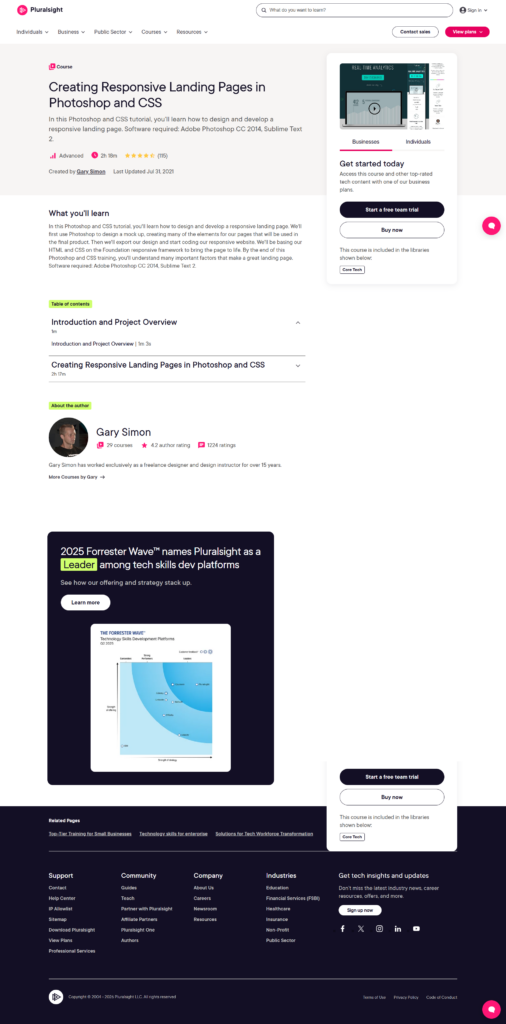
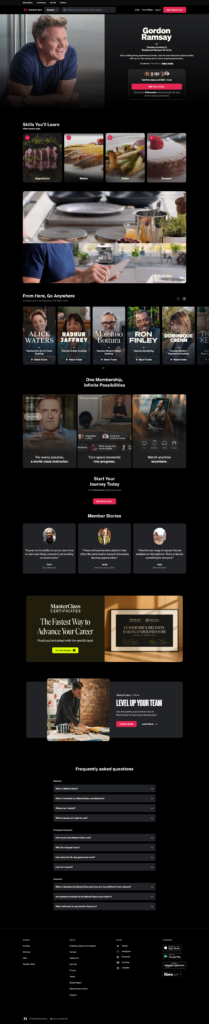
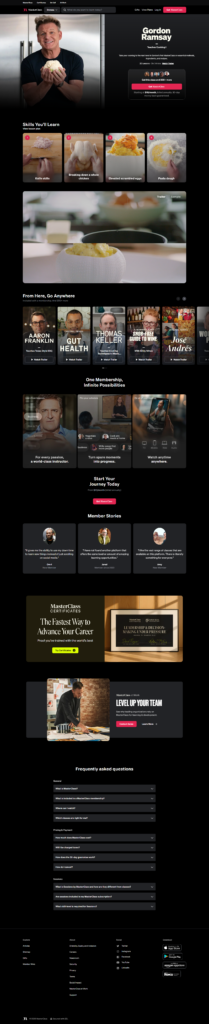
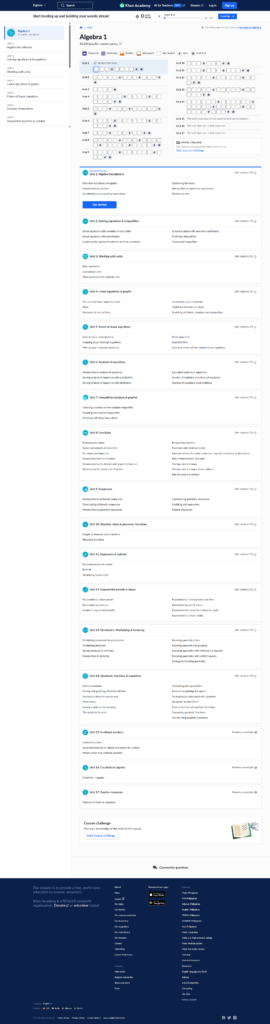
Home » Landing Page Inspiration » Course landing page
Course landing page examples that inspire & convert
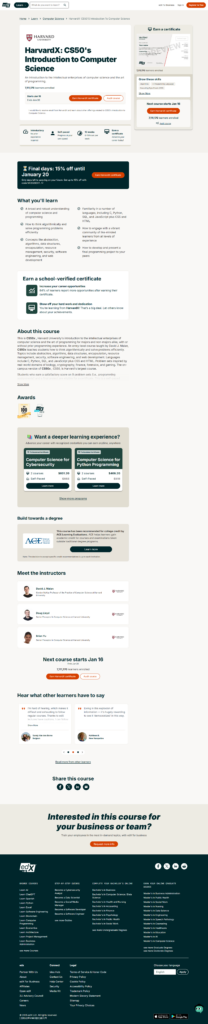
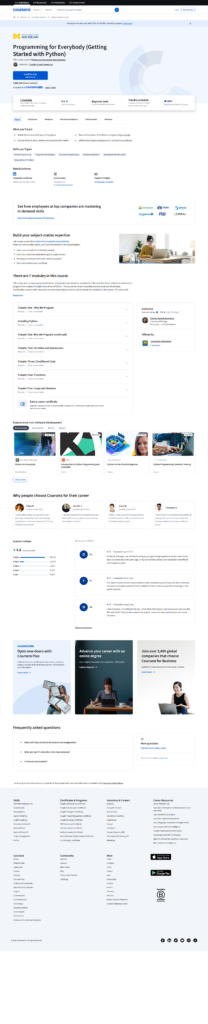
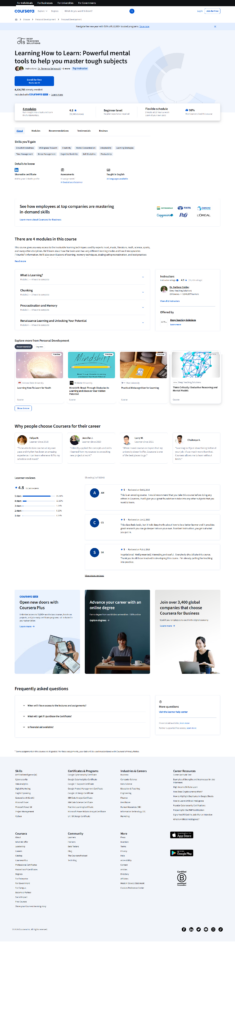
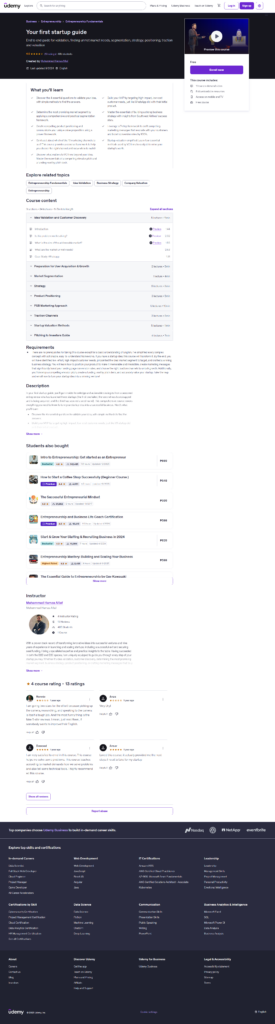
Browse real course landing page examples in one place. Compare how different creators handle pricing, modules, bonuses, and FAQs.
Love These Landing Pages? You Can Make Yours Convert Even Better
Create beautiful, multi-step forms that convert with a zero-commitment free trial (no credit card required).
What is a course landing page?
A course landing page is a standalone web page designed to promote an online course and drive sign-ups. Its main goal is to convert visitors into students by clearly communicating the course’s value, benefits, and learning outcomes.
Unlike general website pages, a course landing page removes distractions like navigation menus, keeping the focus on enrollment. It typically highlights the course title, brief description, target audience, and key outcomes, guiding visitors toward registration.
The page is structured to quickly inform, engage, and motivate users to take action, making it an essential tool for online course creators.
Key elements of a high-converting course landing page
Clear and Compelling Headline
The headline should immediately communicate the course’s main benefit. It must grab attention, clearly convey what learners will gain, and make visitors want to read more. Avoid vague statements and focus on specific outcomes or skills the course offers.
Concise Course Description
Provide a brief overview of the course, emphasizing what learners will achieve. Include key takeaways, the target audience, and unique features. Keep the description scannable, using short paragraphs or bullet points to highlight important information.
Prominent call-to-action (CTA)
The CTA should be visible above the fold and repeated strategically throughout the page. Use action-oriented language like “Enroll Now” or “Start Learning Today” to guide visitors toward signing up.
Instructor Information
Showcase the course creator with a professional photo and brief bio. Highlight relevant experience, credentials, or achievements to build credibility and trust.
Course Curriculum or Modules
List lessons, modules, or topics covered in the course. This gives visitors a clear idea of what to expect and helps them evaluate the course’s relevance to their needs.
Visual Elements
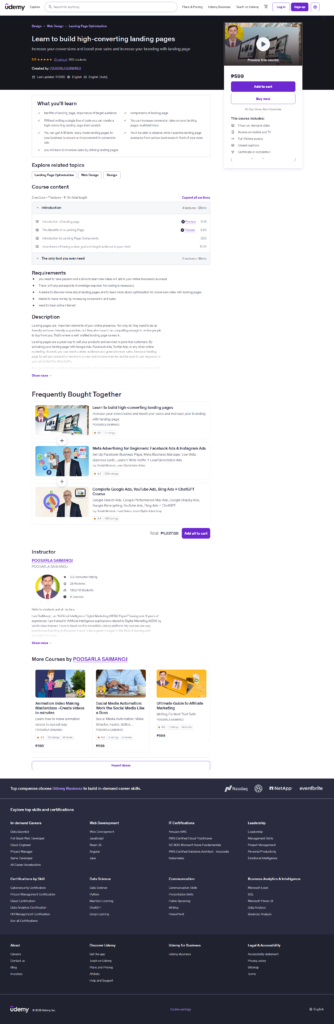
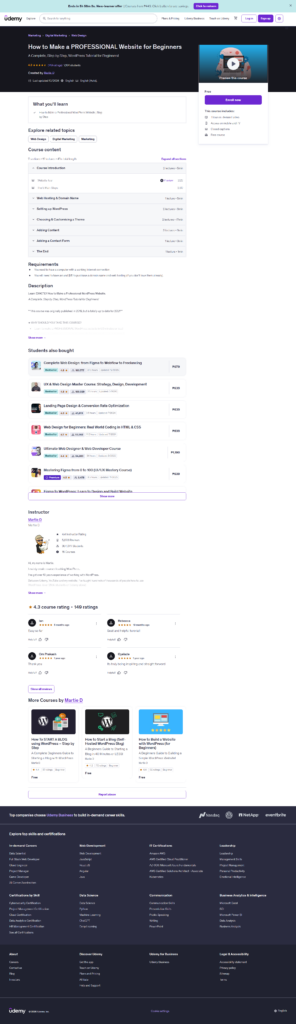
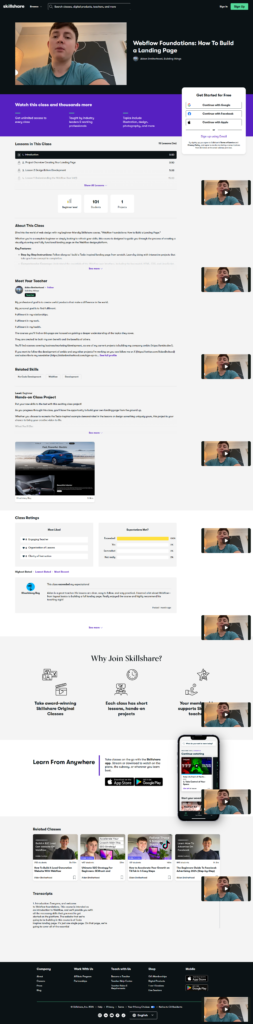
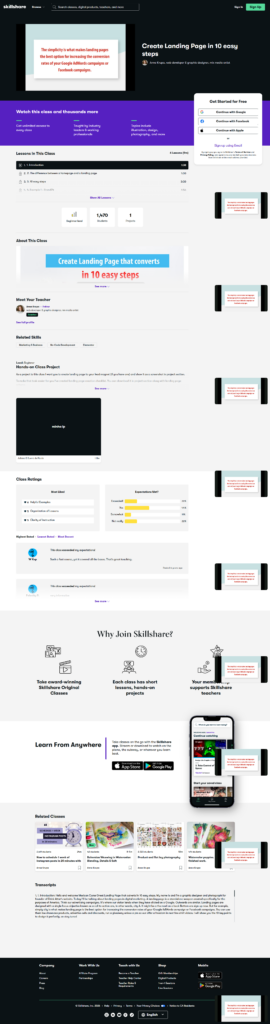
Use images, graphics, or short videos to make the page visually engaging. Include screenshots of the course interface, sample lessons, or previews to demonstrate value. Ensure all visuals are high quality and relevant.
Social Proof
Include testimonials, student reviews, or success stories to build trust. Highlight metrics such as completion rates or student numbers where possible to reinforce credibility.
Pricing and Enrollment Options
Clearly display course pricing, payment plans, or discounts. Make it easy for visitors to understand the cost and take action without confusion.
Mobile Responsiveness
Ensure the page looks and works well on all devices. Many users access course pages via mobile, so responsiveness is critical to capturing enrollments.
How to use these course landing page examples
Analyze each example to understand how top-performing pages structure content and design. Focus on how headlines communicate value, descriptions highlight key benefits, and CTAs drive enrollments. Pay attention to layout, visuals, and course previews to see what engages learners and encourages sign-ups.
Compare the examples with your own course goals to identify elements you can adapt, such as social proof, curriculum presentation, or urgency tactics. Test variations in headline wording, CTA placement, and visual emphasis to see what resonates with your audience.
Keep your target learners in mind and tailor design and messaging to their needs and preferences. Use these examples as inspiration to experiment, refine, and optimize your own course landing page, ensuring it not only looks professional but maximizes enrollment and engagement.
Frequently Asked Questions
A course landing page should be long enough to cover key details like course benefits, curriculum, instructor info, and pricing, but concise enough to keep visitors engaged. Typically, a single-scroll page with clear sections for CTAs, visuals, and social proof works best. Avoid overloading visitors with unnecessary content to maintain focus on enrollment.
Yes. Offering a free preview lesson, trial, or downloadable resource as a lead magnet can build trust and encourage sign-ups. It allows prospective students to gauge the course quality and relevance, increasing their confidence in enrolling. Keep it short, impactful, and aligned with the main course objectives.
We’ve broken down 12 essential elements for a high-converting landing page
Highlight testimonials, case studies, and completion metrics. Share real-world results achieved by students, like career advancements or skills gained. Use visuals such as screenshots, badges, or progress charts to reinforce credibility. Focus on authentic experiences to make your course more compelling and trustworthy.
Yes. A clear curriculum helps learners quickly evaluate course relevance and outcomes. Use bullet points or expandable sections to show modules and skills, keeping it concise.
We’ve broken down 12 essential elements for a high-converting landing page
Emphasize value and outcomes rather than discounts. Highlight unique features, instructor expertise, testimonials, and course benefits. Use strong CTAs, urgency tactics like limited spots, and visuals that demonstrate value. Well-presented information often converts better than temporary price reductions.