
Prospects and Leads: A Practical Guide to Qualification

Most advice about prospects and leads gets stuck on labels. That's useful for training a new rep, but it's a bad way to manage paid traffic, because the question isn't what you call a contact, it's whether the submission can survive qualification, routing, and buyer scrutiny without destroying conversion on mobile.
In practice, the line between a lead and a prospect is where money gets won or wasted. HubSpot's 2026 marketing statistics show that marketers are already prioritizing lead quality and MQLs over raw volume, with lead quality and MQLs at 39%, lead-to-customer conversion rate at 34%, ROI at 31%, customer acquisition cost at 30%, and lead generation volume at 29% (HubSpot marketing statistics). That priority shift makes sense when paid acquisition is expensive and every unqualified submission drags down return.
| Dimension | Lead | Prospect |
|---|---|---|
| Source | Captured from an ad, form, event, or referral | Captured contact that has passed qualification |
| Qualification status | Unqualified or partially qualified | Qualified against fit, intent, or buying criteria |
| Ownership | Often marketing, sometimes shared | Often sales or a routed buyer queue |
| Typical next action | Nurture, score, or verify | Contact, route, or advance to opportunity |
A strong lead flow is no longer just about filling a CRM. It's about deciding how much friction you can add before mobile completion falls apart, and how much evidence you need at capture time before a downstream buyer accepts the record. That's why tools that help teams combine form capture with downstream verification, like cross-platform scraping APIs, are relevant to the broader qualification stack, even when the actual lead form is the front door.
Table of Contents
Table of Contents
- Why the Lead vs Prospect Question Matters More Than You Think
- Defining Prospects and Leads With Clear Criteria
- The Lifecycle From Click to Closed Deal
- Qualification Frameworks Compared for Real Funnels
- Metrics and KPIs That Actually Predict Pipeline
- Handoff Mechanics That Decide Whether a Lead Is Sellable
- Routing Scenarios Across Three Real Buyer Types
- Capture and Qualification Tactics With Growform
Why the Lead vs Prospect Question Matters More Than You Think
The usual lead-vs-prospect conversation treats taxonomy like the finish line. That's the wrong lens for anyone buying traffic or managing a sales handoff, because the definition only matters if it changes what happens next, and whether that next step creates revenue or rejection.
HubSpot's sales and marketing research says web leads followed up within 5 minutes are 9 times more likely to convert than leads contacted later (HubSpot sales and marketing statistics PDF). That timing pressure means qualification can't be an abstract exercise. It has to be built into the capture path, the routing logic, and the buyer delivery layer. In many competitive categories, the first team to respond gets the best shot.
Practical rule: if a question doesn't improve routing, acceptance, or sales readiness, it probably doesn't belong on a cold paid form.
Qualification depth is a conversion decision
A stricter form can produce cleaner submissions, but every extra field adds friction, especially on mobile. A shorter form usually lifts completion, but it can also send more junk into the pipeline if you don't add verification or logic after the submit. That trade-off is the heart of the problem, not the vocabulary itself.
The market context makes the trade-off sharper. HubSpot's 2026 ranking shows that marketers are tracking lead quality and MQLs more than lead volume, which tells you where the pressure is moving: away from raw capture and toward sales-ready output (HubSpot marketing statistics). In practical terms, the fight is no longer over how many names you collected. It's over how many of those names can move.
The boundary matters because buyers reject bad records
In lead-gen verticals, the handoff rules are often unforgiving. If consent evidence is missing, click identifiers don't survive the form, or the submission arrives too late to route live, the lead may be useless even if every field looks complete on the front end. The article by Salesforce on prospecting terminology frames prospects as qualified leads, but it doesn't solve the operating question of where to place the bar when paid media is expensive and forms have to finish on a phone.
That's why the lead-vs-prospect distinction is really a question about monetization readiness. A contact can be a lead inside marketing, a prospect inside sales, and still be unsellable if the compliance and attribution trail is broken. In 2025 and 2026, that's not a side issue. It's the difference between a record that can be routed and a record that gets tossed.
Defining Prospects and Leads With Clear Criteria
A lead is any identifiable contact you captured. It might come from a paid ad, a webinar registration, a trade show badge, or a web form. At that point, you know who the person is, but you still do not know whether they fit your target customer profile or deserve immediate sales attention.
A prospect is a lead that has cleared a qualification bar. That bar can be light or strict. It might mean the person is in the right geography, works at the right company size, shows explicit interest, or matches the ideal customer profile. The practical difference is simple, a prospect is a lead with enough evidence behind it to justify the next action.
Why teams argue about the definitions
Different teams use the same words in different ways because their incentives differ. Agencies may call a record a prospect as soon as it is qualified enough to sell. In-house teams may reserve that word for a contact already accepted by sales. Some sales teams use prospect for anyone they intend to contact, while marketing treats the same record as a lead until a handoff happens.
Reporting breaks when those definitions stay implicit. Marketing can believe it delivered qualified traffic, while sales says the same records were not ready. The argument usually is not about intent, it is about the qualification threshold. A clear internal standard also matters because mobile forms, consent capture, click-ID persistence, and routing speed can all change whether a submission is sellable. This lead qualification checklist and how to qualify inbound leads help teams write down the criteria instead of arguing after the fact.
A clean definition only matters if the CRM, the form, and the buyer queue all use it the same way.
Lead vs Prospect at a Glance
| Dimension | Lead | Prospect |
|---|---|---|
| Source | Captured contact from a campaign or event | Lead that passed qualification criteria |
| Fit | Unknown or unverified | Matched to the target profile |
| Ownership | Usually marketing first | Usually sales, routing, or buyer acceptance |
| Next action | Score, nurture, or verify | Contact, route, or advance |
Some teams flip the words entirely. They use prospect as the broader term and lead as the qualified subset, which is a workable internal convention if everyone agrees on it. The trouble starts when marketing, sales, and operations each assume their own version is the standard.
That is why universal terminology is a weak goal. Build a shared rule set instead. If everyone knows which fields, signals, and conditions move a record from lead to prospect, reporting gets cleaner and handoffs become less political.
The Lifecycle From Click to Closed Deal
A contact usually moves through a predictable sequence, even if the labels differ from company to company. The stages are visitor, lead, MQL, SQL, opportunity, and customer. Each step needs a trigger, or the funnel turns into a vague bucket with no operational value.
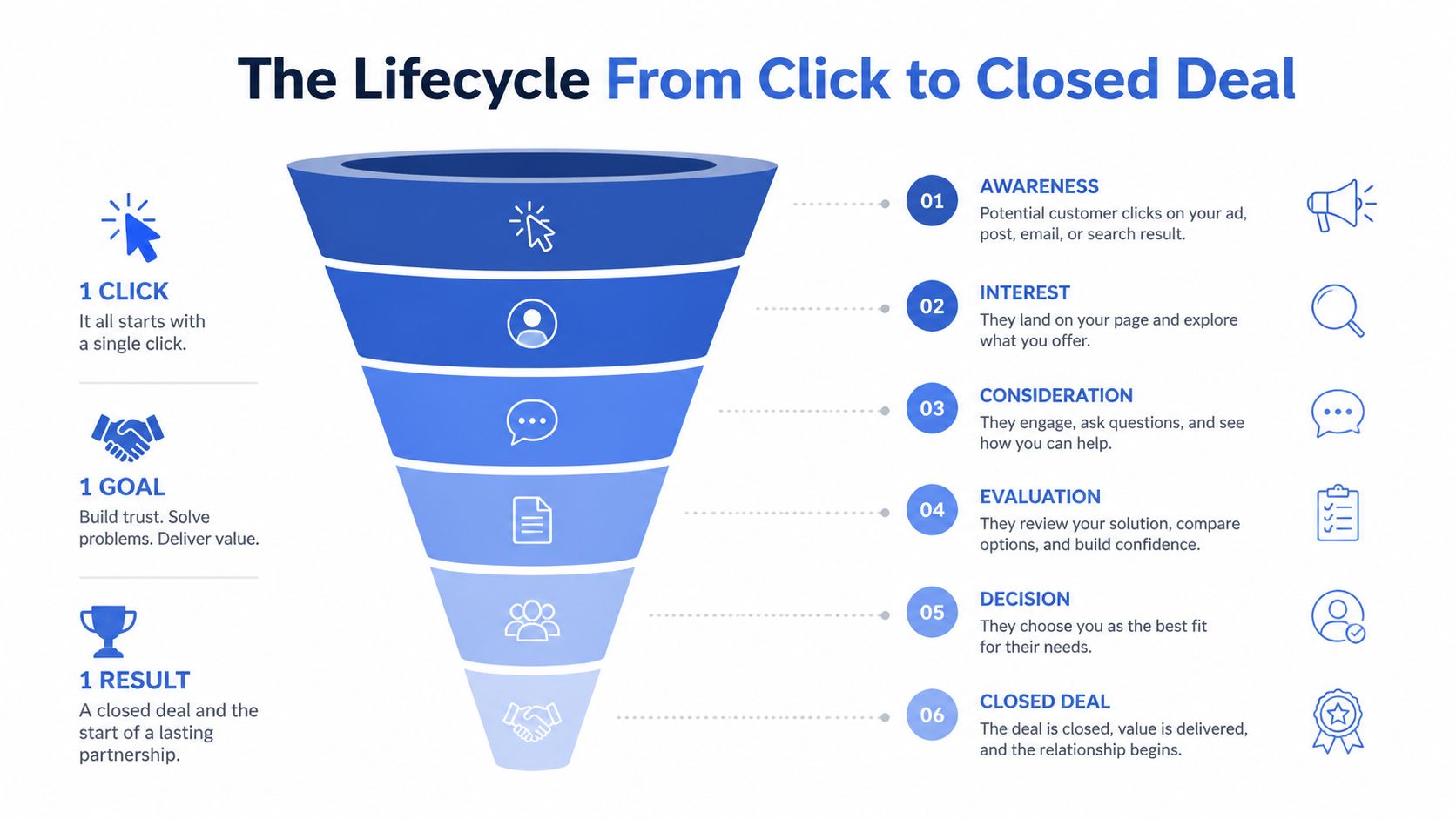
What actually moves a contact forward
A visitor becomes a lead when they submit identifiable information or otherwise give you a way to follow up. A lead becomes an MQL when marketing applies a scoring rule or qualification filter. A lead becomes an SQL when sales accepts it as worth pursuing. From there, the record can become an opportunity once a real buying conversation exists, and eventually a customer once the deal closes.
The same person can sit at different stages in different companies. A B2B SaaS team may call a form submit a lead until an SDR confirms fit and intent. A lead-gen agency may call the same submit a prospect immediately if it passes routeable criteria and can be delivered to a buyer. The difference is the threshold, not the human being.
Marketing-led and sales-led progression are not the same
Marketing-led funnels usually start with broad capture and then narrow through scoring, enrichment, or nurture. Sales-led funnels usually push faster to contact, because the team wants to confirm fit before the opportunity cools. That's why the same contact can be handled differently across organizations with different sales motions.
Stage definitions are compensation rules in disguise. If you get them wrong, forecasts, routing, and rep expectations all drift together.
What matters is that each transition has an owner. If no one owns the move from lead to MQL, or from SQL to opportunity, the funnel will stall and the blame will bounce between teams. Clear stage rules make the pipeline measurable and keep the handoff from becoming guesswork.
Qualification Frameworks Compared for Real Funnels
Qualification frameworks are useful only when they fit the traffic source and sales motion. BANT, CHAMP, and MEDDIC are all valid in the right context, but none of them should be forced into a form that has to load fast and finish on a phone. For high-volume paid lead gen, a lighter rule-based model often outperforms heavy frameworks because it preserves mobile completion while still disqualifying obvious junk.
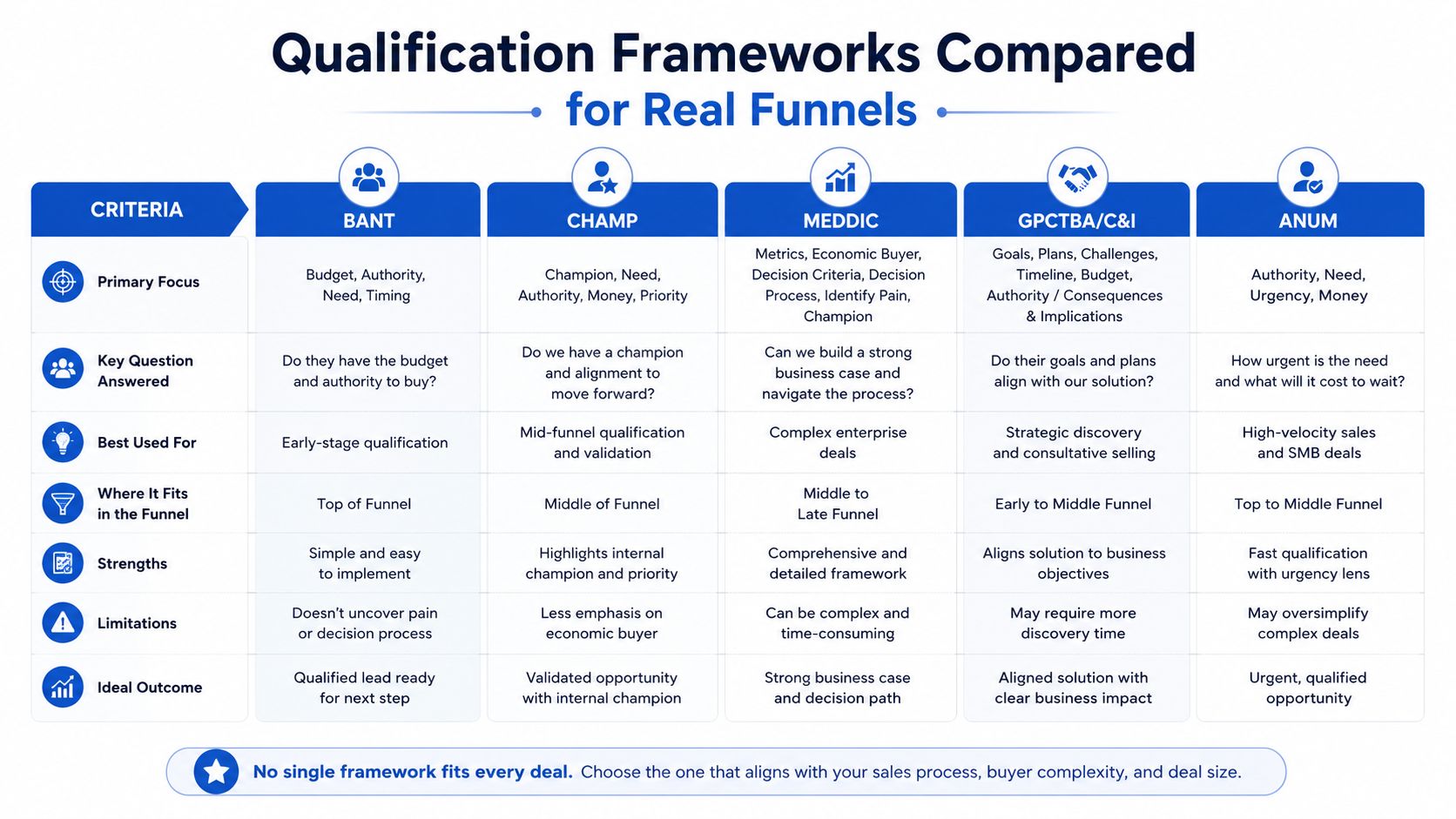
Where each framework fits
BANT is simple and familiar, but budget questions can kill momentum on cold traffic. If the prospect hasn't even decided they want the offer, asking about budget too early feels abrupt and can suppress completion.
CHAMP works better when pain comes first. That makes it more natural for inbound traffic that already signals a problem. MEDDIC is powerful for complex B2B selling, but it's usually too heavy for a short paid form because it belongs deeper in the sales cycle than the initial capture step.
For context on deal progression, the five stages of the buying cycle are useful because they show why not every traffic source deserves the same qualification depth. Awareness traffic usually needs lighter capture. Higher-intent traffic can tolerate more questions because the visitor already expects a deeper conversation.
Match the framework to the channel
A paid social form is not the place for a long interrogation. If the traffic is cold, mobile, and interrupt-driven, prioritize a light qualification model and use conditional logic to branch only when the user has already shown intent. Search traffic, by contrast, can often support more logic because the visitor arrived with a problem in mind.
This lead qualification checklist helps teams choose the right level of friction without turning the form into a survey. The practical standard is simple, ask only for the criteria you need to route, verify, or reject the submission.
A good framework is one that your team can apply consistently without slowing the funnel to a crawl. If sales can't act on the output and marketing can't defend the drop in completion, the framework is too heavy for the channel.
Metrics and KPIs That Actually Predict Pipeline
CPL tells you how cheap the click-to-form path is. It doesn't tell you whether the records can move. The better weekly view starts with MQL-to-SQL conversion, lead-to-opportunity rate, speed-to-lead, and acceptance quality by channel.
Recent benchmark roundups put median MQL-to-SQL conversion around 9.8% to 13%, while stronger programs with tight ICP fit and fast follow-up reach 15% to 20%+ (Callbox benchmark roundup). That spread is useful because it shows how much room there is to improve without spending more on traffic. Better qualification and faster response can nearly double the share of leads that become sales-ready.
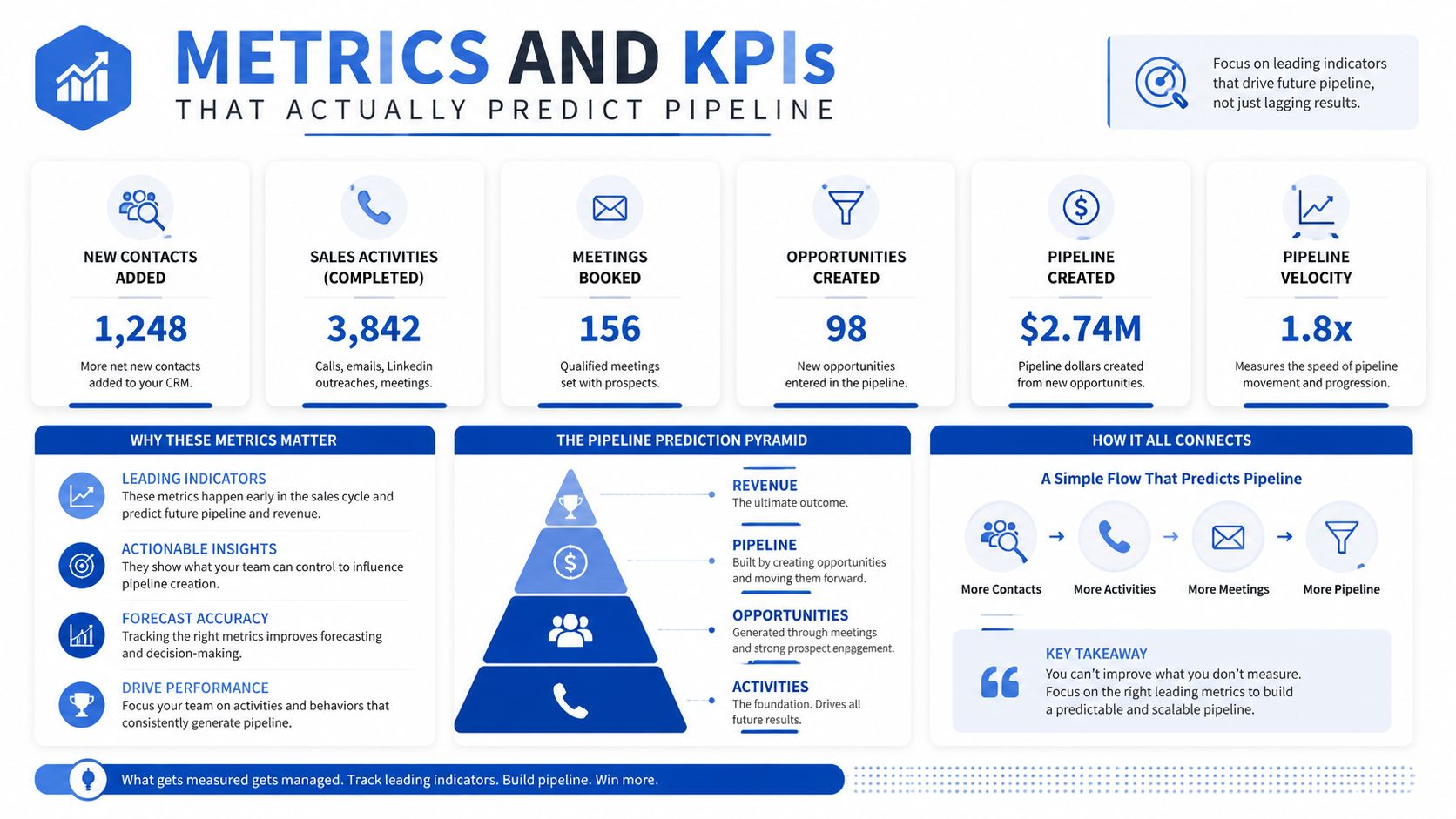
Speed matters more than most dashboards admit
HubSpot's sales and marketing research says web leads followed up within 5 minutes are 9 times more likely to convert than leads contacted later (HubSpot sales and marketing statistics PDF). That single metric often tells you more about real pipeline health than lead score alone. If the response team is slow, even good records go cold.
A separate lead-generation benchmark from Sopro says the average company takes 29 hours to respond to a web-generated lead, which makes the five-minute standard look even more operationally important (HubSpot sales and marketing statistics PDF). In high-competition categories, that lag is not a minor inefficiency, it's the point where better opportunities leave your queue.
What belongs on the weekly dashboard
- MQL-to-SQL conversion: shows whether marketing is qualifying correctly.
- Lead-to-opportunity rate: shows whether sales is getting enough usable records.
- Speed-to-lead: shows whether you're contacting people before intent fades.
- Acceptance rate by channel: shows where traffic quality is strongest.
- Qualification depth by source: shows which forms can support more friction.
Practical rule: if the KPI doesn't change form design, routing speed, or sales follow-up, it's probably a vanity metric for this kind of funnel.
The automating outreach to sellers angle matters here because delivery speed and seller response are tightly linked in routed lead systems. If your handoff is slow, your best KPI won't save the funnel. The best teams watch the numbers that predict whether a lead gets touched, accepted, and moved.
Handoff Mechanics That Decide Whether a Lead Is Sellable
The handoff is where most lead stacks leak value. A form can look perfect in the browser and still produce a record that buyers won't accept because the metadata didn't survive, the consent trail is incomplete, or the submission arrived too late to route live. That's why handoff quality is part of lead quality.
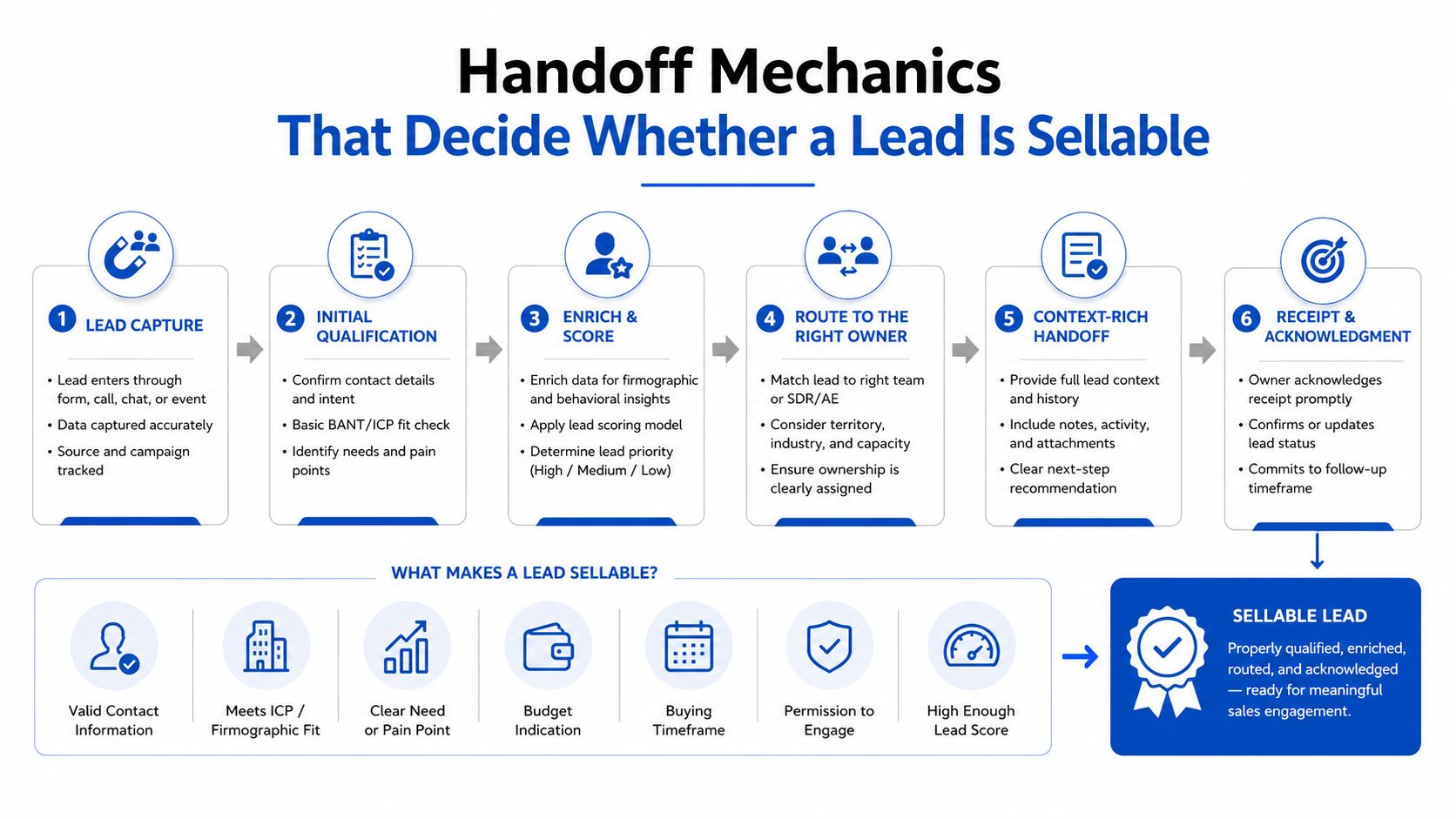
The path from submit to sale
First comes submission. Then the form should attach tracking fields, consent evidence, and verification signals before anything leaves the page. After that, the record needs to hit the CRM, webhook endpoint, or distribution layer in real time, not after a batch delay.
If any link breaks, the problem can be invisible until rejection shows up downstream. A missing click ID means attribution is incomplete. A missing consent artifact can make the lead unusable in regulated verticals. A slow handoff can erase the response-time advantage you built with the ad.
Batch delivery loses to live delivery in hot markets
In competitive categories like insurance, mortgage, solar, legal, and home services, live routing usually matters more than neat reporting. Buyers want fresh, verifiable submissions, and they often judge a record by what was attached at capture time rather than by whatever the sales team adds later. That's why instant alerts and live distribution are operational features, not nice-to-haves.
The lead vs. prospect article from Tomba points to the growing importance of consent and attribution, but the practical takeaway is simpler. If a buyer can't verify the record fast, the submission can fail even if the contact is real.
A clean handoff usually needs four things. Tracking persistence so the source survives the form. Consent evidence so downstream systems can accept the lead. Real-time routing so speed-to-lead doesn't collapse. Verification so fake or low-quality entries don't reach the buyer queue.
Routing Scenarios Across Three Real Buyer Types
A solar lead-gen agency and a B2B SaaS team can both use forms, but they don't optimize for the same thing. One cares about sellability inside a distribution system. The other cares about whether sales has enough context for discovery. The capture logic has to reflect that difference.
For a solar lead-gen agency selling into a ping or distribution setup, the priority is to collect enough qualifying detail to protect margin without making the form unbearable on mobile. A conditional question about geography can protect against useless submissions, but the agency usually can't afford a long interrogation up front. Consent evidence and live delivery matter because the buyer side is often strict.
For an in-house insurance team, routing is usually closer to a pod or queue model. That means the form needs to confirm basic fit, capture the right contact fields, and pass cleanly into a CRM where an SDR or agent can respond immediately. If the record lands without the right metadata, the pod may still call it a lead, but it won't behave like a usable prospect.
For a B2B SaaS marketer, the handoff is different again. The team may accept a lighter form on top-of-funnel traffic and let the AE layer qualify more during discovery. In that case, conditional disqualification is only worth using when the traffic is clearly wrong, because over-filtering can throw away people who would have converted later.
A multi-step form, a quiz flow, or a short single-step form can all work. The right choice depends on whether the goal is sales conversation, appointment booking, or buyer acceptance. The structure should follow the routing model, not the other way around.
Capture and Qualification Tactics With Growform
The cleanest operational move is to gather more evidence at capture without forcing every visitor through a long static form. Multi-step and quiz-style flows let you ask for qualification in smaller chunks, which usually feels lighter on mobile than one dense page. Conditional logic can then disqualify obvious junk or branch users into the right path before the record ever reaches sales.
Growform is one option in that stack because it's built around multi-step lead capture, conditional qualification, and real-time delivery into CRMs and routing tools. Its B2B lead forms for demand generation teams positioning makes the use case clear, especially for teams that care about capture quality and handoff speed rather than generic survey collection.
Where the form layer should do the work
Use the form to preserve source data, keep the experience mobile-friendly, and route based on answers that matter. If your flow supports hidden fields for UTMs and click IDs, instant alerts, and native handoff into downstream tools, then the form is doing real operational work instead of just collecting names.
The strongest setups also attach consent evidence and verification at the point of capture. That keeps the record usable for buyer systems and reduces the chance that a lead gets rejected later for reasons that should have been caught earlier. In high-volume funnels, that's more valuable than polishing the thank-you page.
If you're running paid acquisition at volume, the decision is usually not whether to qualify. It's how much qualification you can add without hurting mobile completion or slowing live delivery. Teams that need that balance, especially in lead-gen, insurance, solar, mortgage, legal, and local service funnels, should test a form layer that can qualify, disqualify, and route in real time.
If you're trying to raise lead quality without sacrificing mobile conversion, build the capture layer around that trade-off instead of around taxonomy. Visit Growform to see how multi-step forms, conditional logic, and real-time handoff can fit into a qualification workflow that keeps submissions sellable.