
SMS Verification Service: The Complete Guide for Lead Gen
Most advice about an SMS verification service starts in the wrong place. It treats the workflow like a security feature, when the actual money question in lead generation is simpler, will this phone number get accepted, contacted, and sold, or will it get rejected and dragged down the stack.
That's why operators care. A form can look healthy, the CPL can look fine, and the pipeline can still leak because the numbers are junk, unreachable, disposable, or never consented to be contacted. In a buyer-facing funnel, verification is not a nice-to-have, it's a routing decision that affects buyer trust, acceptance, and downstream economics.
The market around SMS verification is not a tiny corner case either. Independent estimates put the category in the low billions, including a 2025 estimate of USD 4.639 billion with 7.6% CAGR, and another estimate of USD 2.6 billion in 2024 projected to reach USD 8.7 billion by 2035 at 11.6% CAGR (market estimate). That's a sign that verification has become infrastructure, not a novelty.
Table of Contents
Table of Contents
- Why Lead Generation Teams Care About SMS Verification
- How an SMS Verification Service Actually Works
- Comparing OTP, Phone Lookup, and Silent Ping
- Lead Quality and Fraud Prevention Outcomes
- Legal and Compliance Considerations You Cannot Skip
- A Vendor Features Checklist That Actually Differentiates
- Wiring Verification Into Forms, CRMs, and Buyer Pipelines
- Metrics to Track and Failure Modes to Watch
Why Lead Generation Teams Care About SMS Verification
The wrong way to think about verification is as a fraud-control add-on. The right way is to treat it as lead acceptance control, because every verified phone number is one fewer reason for a buyer to bounce the record back or discount it on arrival.
That matters most when traffic is already paying. Meta clicks land in a form, the form converts, and then the buyer rejects the lead because the number is fake, unreachable, or obviously low trust. At that point, the problem isn't top-of-funnel volume. It's that the pipeline is feeding the wrong kind of contact data into a monetization engine that punishes sloppiness.
Buyer acceptance is the real KPI
Lead gen teams don't lose money only when bots fill out forms. They lose money when a real form submit turns into a rejected record, a lower payout, or a dead callback list. SMS verification sits at the point where that damage can still be prevented.
A clean verification layer doesn't guarantee a sale. It does something more basic and more valuable, it raises the odds that the lead buyer sees a believable, reachable phone number. That's why operators in solar, insurance, mortgage, and home services keep returning to it, even when the marketing copy from vendors makes the feature sound generic.
Practical rule: if a phone number can't survive a simple verification step, it probably shouldn't be routed as a high-value lead.
The market has already moved past basic login protection
Large verification platforms now support massive volume, which is part of the reason the category no longer feels theoretical. One provider reported 1,293,491 users, 63,218,130 activations, and a 96.4% SMS delivery success rate (provider report). That scale tells you two things. First, verification is used in bulk. Second, delivery quality is a real operational concern, not a vendor brochure line.
For a performance marketer, the takeaway is blunt. A number that passes verification is more likely to be saleable, contactable, and accepted by a buyer. A number that fails or never arrives is a signal that your funnel is bleeding quality before the handoff.
How an SMS Verification Service Actually Works
At the core, SMS verification is a short-lived server-side state machine. The system generates a code, stores it, sends it, compares the entry, and then invalidates it after use or timeout. The practical reason for that design is simple. Verification windows are narrow, usually about 60-300 seconds, and many systems cap wrong attempts at 3-5 before locking the flow (technical overview).
That design is not decoration. It reduces replay risk, slows brute-force guessing, and forces the code to matter only inside a very short window. If you're buying a vendor, ask how they handle TTL, retries, and invalidation. If they can't describe those cleanly, they're probably selling a thin wrapper around a weak flow.
The three patterns you'll see
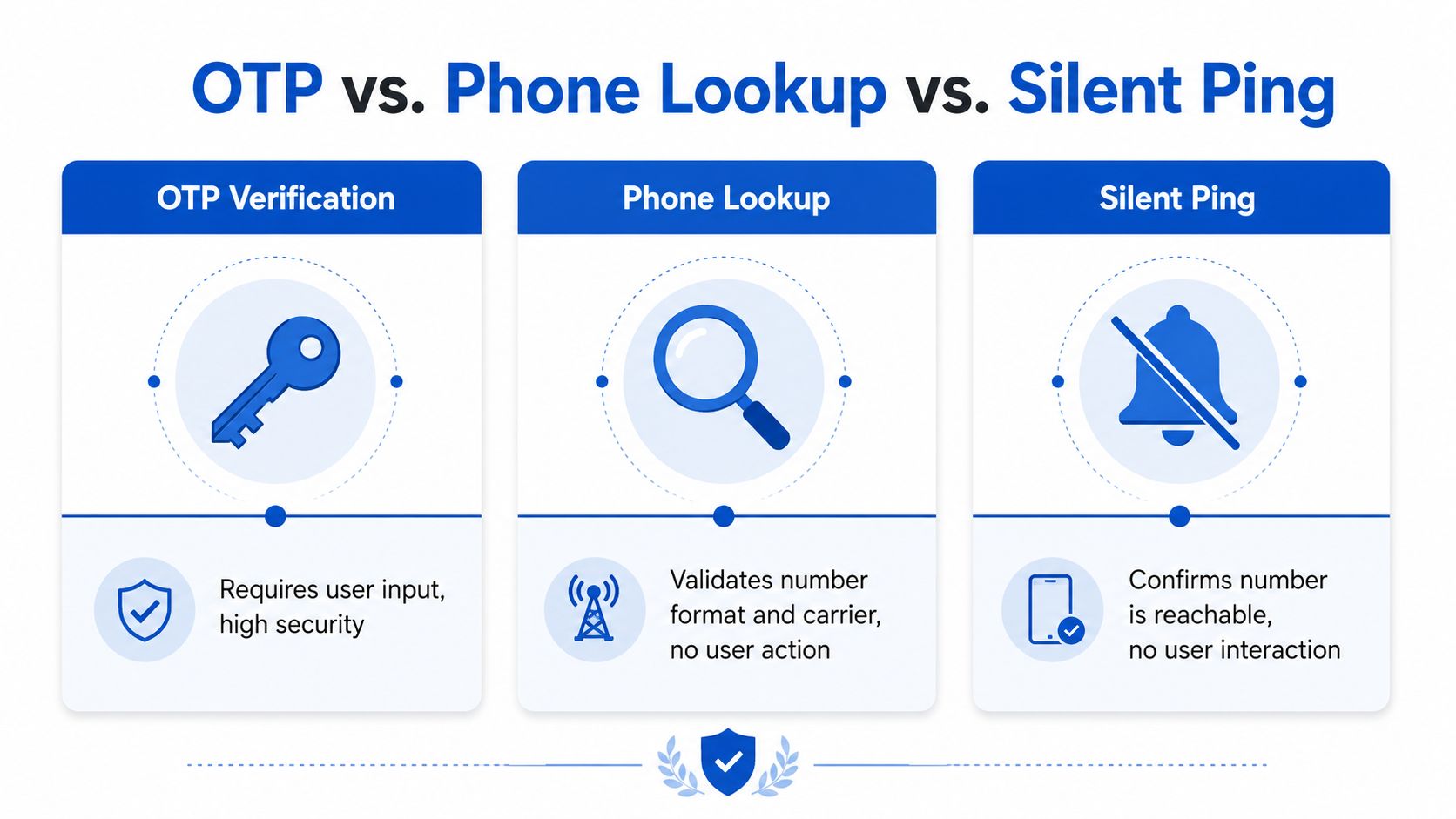
OTP delivery is the familiar path. A number gets a one-time password, the user enters it, and the system checks it against the stored state. This is the strongest human-interaction signal of the three because it proves someone received and typed the code.
Phone lookup skips the message and checks the number itself. It's the fastest way to catch formatting problems, invalid ranges, and obvious low-trust number types.
Silent ping tries to confirm reachability with no visible SMS step. It's useful when you want a lower-friction experience, especially in mobile-first flows, but it's more constrained by environment and carrier behavior than a basic OTP check.
A simple request path looks like this. A form submits a phone number to the verification API, the API returns a pending status, the form either asks for the code or proceeds if the check is invisible, and the final submission carries the verification result into the CRM or buyer payload. The key question isn't whether the API exists. It's what the app does with the verification signal once it gets it.
App-linked flows have strict formatting limits
If you're using app-linked verification, the message itself has hard constraints. Google's SMS Retriever guidance requires the verification SMS to be no longer than 140 bytes and include an 11-character app hash derived from the package name and signing certificate, truncated from a Base64-encoded SHA-256 digest (Google guidance). That means your message can't be wordy or sloppy.
The practical lesson is direct. Keep the copy compact, deterministic, and boring. Extra text can break parsing, exceed the byte limit, or reduce auto-read behavior. For lead funnels, compactness matters because any failure in message structure turns into a failed verification event and a lost lead.
Comparing OTP, Phone Lookup, and Silent Ping
The three methods solve different problems, and pretending they're interchangeable is how teams overpay or over-friction their forms. The only useful comparison is signal strength, cost, friction, and integration burden.
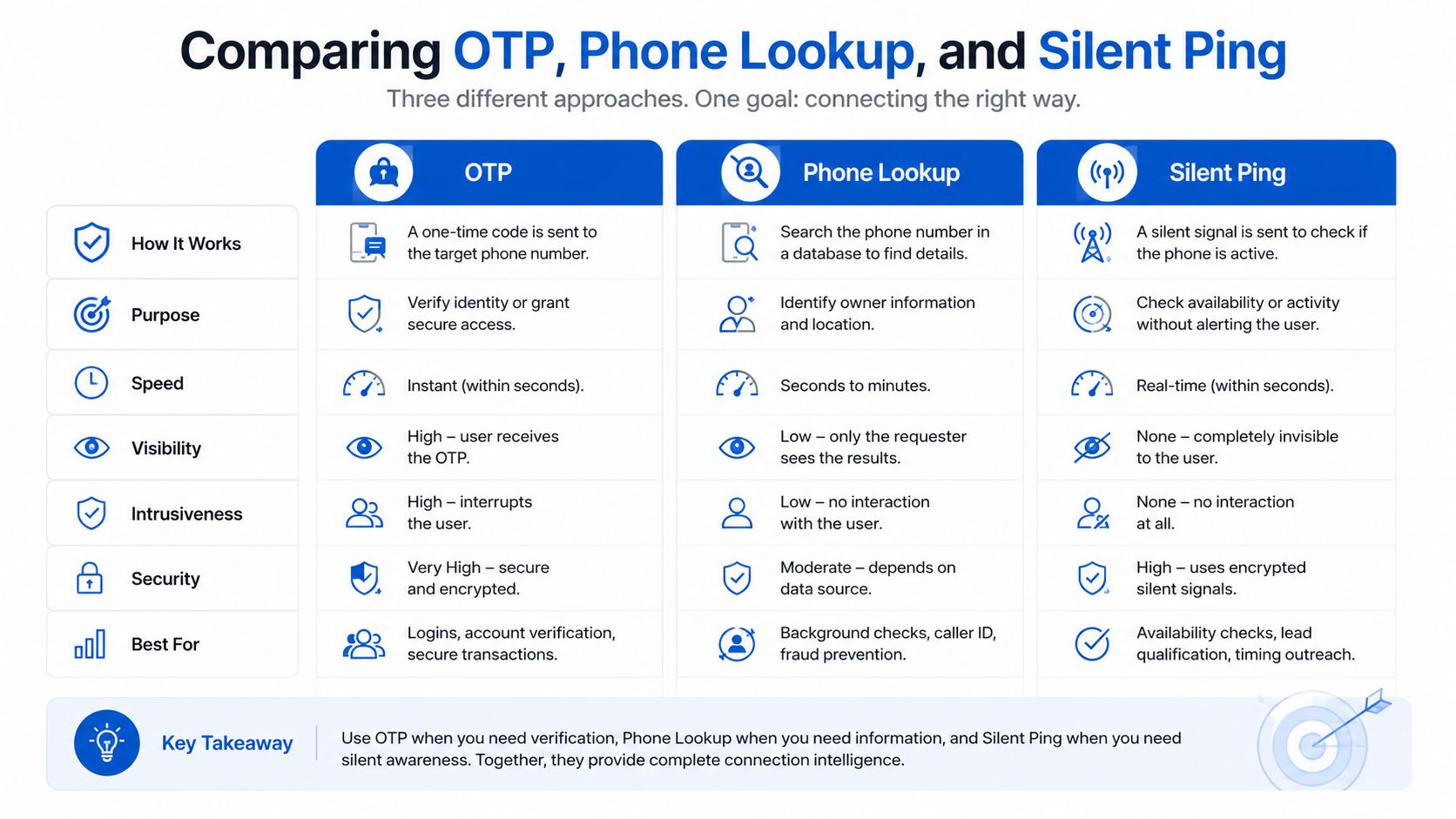
| Method | Signal strength | Cost and friction | Integration complexity |
|---|---|---|---|
| OTP Verification | Strongest proof that a human saw and entered a code | Highest friction because it adds a step | Moderate, because you need code generation, expiry, retries, and fallback handling |
| Phone Lookup | Good at catching bad formatting and obvious low-trust numbers | Lowest friction, usually no user-visible step | Low to moderate, because it's a simple pre-check |
| Silent Ping | Useful reachability signal without visible user action | Very low friction, but environment-dependent | Higher than it looks, because it depends on device and carrier behavior |
If the goal is Meta traffic into a solar funnel, I'd start with phone lookup, then add OTP only on suspicious records or when buyer acceptance starts slipping. You want to keep the first pass light enough that mobile completion doesn't suffer.
If the flow is a GoHighLevel booked-appointment path, OTP makes more sense. At that point, the number has to be good enough for reminders, confirmations, and follow-up, so a small friction bump is acceptable.
If you're submitting a ping-tree lead to a buyer, use the strongest signal your distribution partner will accept. Buyers don't care that your form was elegant if the number can't be contacted.
There's a useful external reference on the mechanics of real-time and bulk verification inside capture workflows here, insight into CRM strategies. The lesson is not that one method wins universally, it's that the method has to match the value of the lead and the tolerance for drop-off.
Lead Quality and Fraud Prevention Outcomes
Verification solves three different problems, and each one affects revenue differently. It stops bot-typed junk numbers, it filters out a chunk of low-trust disposable or VoIP records, and it gives you a cleaner starting point for compliance-sensitive outreach.
What it catches and what it misses
Bogus numbers are the easiest win. A lookup or OTP flow can catch obvious garbage before it enters the CRM, which means fewer dead dials and fewer embarrassing buyer complaints. Disposable and virtual numbers are harder, because they can look valid while still being bad monetization assets.
That's where verification needs support from other signals. Number type, carrier reputation, and delivery history all matter. The gray-market side of the industry has made this worse, not better. Recent lists of working services show a large ecosystem of rented and temporary numbers, which means bad actors can still find ways around weak checks.
Operational truth: a verified number is not the same thing as a good lead. It's just a better lead than one you never checked.
Why buyer acceptance changes fast
The downstream effect is what matters. Better verification usually means cleaner buyer acceptance, fewer rejected records, and less time wasted on uncontactable leads. It can also protect EPC because buyers spend less budget on junk and are more willing to keep volume flowing.
Compliance risk drops too, but only if the signal is paired with consent evidence. If you collect a phone number, verify it, and then send it to a buyer without proving the person agreed to be contacted, you've solved a data-quality problem and left the legal problem sitting there.
For teams that want a tighter operating system, the most useful reading isn't just about verification. It's about CRM hygiene and lead data quality, because the buyer doesn't judge your stack by the form field alone. They judge it by the lead that lands in their CRM.
Legal and Compliance Considerations You Cannot Skip
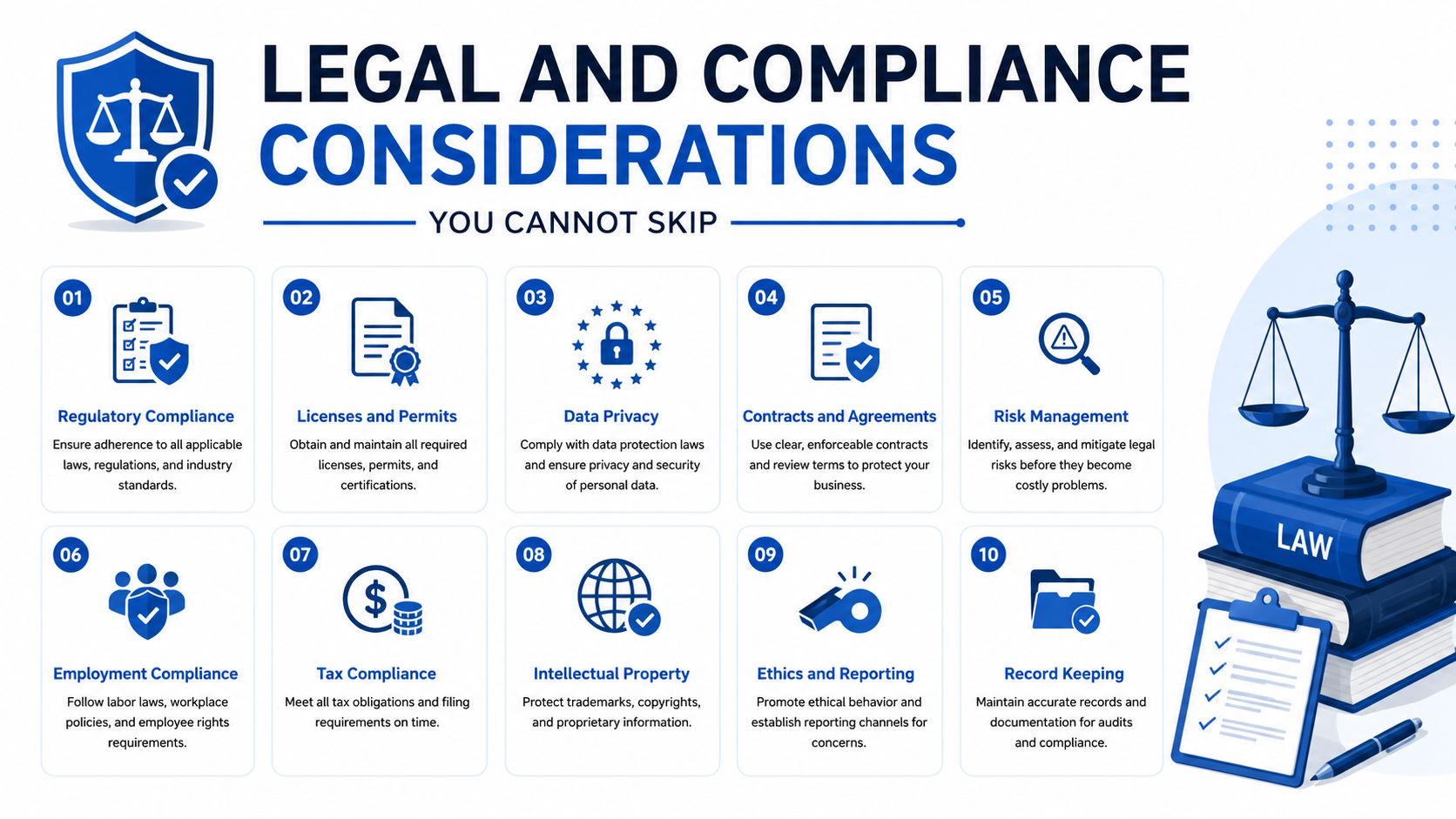
Transactional verification and marketing consent are not the same thing. A code used to log someone into an account or confirm an action is a different use case from a phone number used to sell, market, or route a lead. If your funnel blends those together, you're creating avoidable exposure.
What the form needs to capture
For lead gen, the form should capture the consent language, the seller identity, the disclosure that consent isn't required to buy, and a revocation path. It should also store the timestamp, the source URL or campaign context, and the exact version of the consent language shown at submission. Those are the pieces buyers and compliance teams care about.
If you're serious about this, pair the phone check with consent evidence tools. TrustedForm and Jornaya exist for a reason, and they're the kind of evidence layer that helps when a buyer asks where the lead came from and what the user agreed to.
Why verification alone isn't enough
SMS verification can prove the number works. It can't prove the person understood the marketing disclosure. That's the gap a lot of teams ignore because they're focused on speed-to-lead and payout, not on what happens when a buyer audits the file.
If you publish a privacy policy, keep it accurate and current. Review our legal privacy terms is the kind of document trail buyers expect to see when they review how data is handled, especially in regulated verticals.
For the TCPA-specific angle, this internal guide is the right companion reading, what lead gen operators need to know in 2026. The practical point is simple. A clean phone verification result with no consent evidence still leaves you exposed.
A Vendor Features Checklist That Actually Differentiates
Most vendor pages blur together. They all say fast, secure, reliable, and global. None of that helps you decide whether the service will improve acceptance or just add another layer of failure.
Tier one coverage and deliverability
Start with the basics that change outcomes.
- Country and number-type coverage. Can the provider verify the geographies and number classes you buy traffic in?
- Deliverability and latency. How fast do codes arrive, and what happens when a route degrades?
- Transparent pricing. Ask what happens on retries, resends, and volume spikes.
- Number reputation handling. Does the provider support classification or filtering before OTP delivery?
If a vendor can't answer those without hand-waving, move on. A cheap per-check price is useless if the route is noisy or the numbers don't get through.
Tier two integration surface
The next layer is operational. You want REST API, webhooks, and preferably SDKs or plug-ins that don't force your team into a custom build every time marketing changes a form. Real-time mode matters more than batch mode for hot lead routing, but batch is useful for list cleanup and older databases.
Ask whether the provider connects cleanly to your form stack, CRM, and distribution layer. If they only support a generic API and leave the plumbing to you, budget for delay and technical debt.
Tier three compliance and fallback handling
The last layer is where mature teams separate themselves from amateurs. You want audit trails, consent logging support, and fallback channels like voice, email, or TOTP when SMS fails. You also want to know how they handle shared routes, because a generous SLA on paper means little if the traffic gets filtered before it matters.
Vendor test: if a provider can't explain what happens when the code never arrives, they're not a verification partner. They're just a message broker.
Wiring Verification Into Forms, CRMs, and Buyer Pipelines
The cleanest setup is boring. The phone field fires a lookup on blur or submit, the OTP runs only when the number needs extra proof, and the result gets attached to the submission payload before the record leaves the form.
That means the verification signal becomes just another field in the handoff, not a side process someone has to reconcile later. In a real stack, the webhook carries the answer into the CRM, the call center platform, or the buyer feed, and the downstream system decides whether to route, hold, or reject.
Where it fits in the funnel
For mobile-heavy lead capture, silent ping can be the least disruptive check if the campaign and geography support it. For low-friction funnels where you mainly want to filter obvious junk, phone lookup can be enough. For higher-value submissions, OTP belongs in the path because the extra step is worth the cleaner signal.
The important part is speed-to-lead. Verification should not become a slow manual gate. It should happen inside the submission chain, with hidden fields, webhooks, and native CRM integrations doing the handoff instantly.
If you're mapping the architecture against a form builder or capture tool, this page on lead form phone verification shows where the check sits relative to the rest of the flow. The design question is always the same, what do you do with the verification signal after it lands?
Metrics to Track and Failure Modes to Watch
You do not need a giant dashboard. You need three numbers and a short failure log.
Verification pass rate tells you how many submitted numbers clear the check. Verification-to-delivered-lead ratio tells you how many of those pass the basic test and still behave like reachable humans. Post-verification rejection rate at the buyer tells you whether the downstream buyer thinks the quality improved.
The first 30 days are where problems show up
Carrier filtering is the most obvious issue, especially when sender types or routing patterns get treated differently by different networks. International latency can also make a good flow look broken if the code arrives too slowly or the resend logic is too aggressive.
Fallback channels deserve attention too. If your users keep hitting a dead end when SMS fails, you need voice, email, or TOTP ready before the complaints start. A silent drop in pass rate after a country or carrier policy change is another common failure, and it usually shows up before anyone on the team notices the root cause.
Keep the rollout monitored like infrastructure, not like a one-time form change.
This is the operating model. Verification is not a checkbox you install and forget. It's a live system that should get reviewed whenever traffic sources, geographies, carriers, or buyer standards change.
If you want a cleaner lead capture stack, build it around a form layer that can verify phones, preserve consent, and hand off data in real time without engineering tickets. Growform is built for that exact job, multi-step qualification, clean routing, and the kind of lead capture control that keeps buyer acceptance from collapsing after the click.