
WordPress form builder: the 8 best form plugins and tools compared

Updated Published 15 min read
Search for a WordPress form builder and you get two kinds of answer: plugins that run inside WordPress, and hosted tools that you embed. Picking between them matters more than picking a brand.
A WordPress form builder is a plugin or hosted service that lets a site owner create, style and publish forms on a WordPress website without writing code, store or forward the submissions, and connect them to email, CRM and payment tools.
This guide compares eight of them on what each license actually includes, what it costs at renewal and how well it serves a form whose job is to produce leads. It is about choosing the tool. If you have already chosen Growform, the step-by-step is in how to add a Growform multi-step form to WordPress, and the case for the multi-step format on WordPress is in WordPress multi-step forms that convert.
Update (October 2026): every price in this guide was re-read on the vendors' own pricing pages. WPForms, Gravity Forms and Ninja Forms come from our captures of 6 October 2026, the rest from the pages on 9 October 2026. Growform's plans have changed since the first version of this guide, and the figures below are current.
Plugin or hosted: the first decision
A plugin such as WPForms or Gravity Forms installs on your server. Entries live in your WordPress database, the form is styled by your theme, and the plugin is updated like any other. You pay a yearly license, usually per site, and most vendors show a first-year discount with renewals at the full price.
A hosted builder such as Growform or Jotform runs on the vendor's servers. You build the form there and paste a snippet into a Custom HTML block, an Elementor widget or a theme template. Nothing is installed on the site, the form looks the same on every page builder, and you pay for usage, which for Growform means leads per month.
For a contact form, a registration form or anything where the submissions belong in WordPress, a plugin is the natural choice. For a lead form on a landing page that takes paid traffic, the hosted route tends to win because the form is the product: multi-step flows, qualification logic, attribution and real-time delivery to a CRM are what you are paying for, and the WordPress site is only where it appears.
The 8 best WordPress form builders
- Growform
- WPForms
- Gravity Forms
- Formidable Forms
- Ninja Forms
- Forminator
- Jotform
- Fluent Forms
1. Growform
Growform is a hosted multi-step form builder made for lead generation. Marketers, lead generation companies and agencies use it to build forms that qualify leads with conditional logic, keep UTMs and click IDs attached to every submission and deliver each lead in real time to a CRM, a webhook or one of 7,000+ apps through Zapier. On WordPress it embeds with one script tag and no plugin.
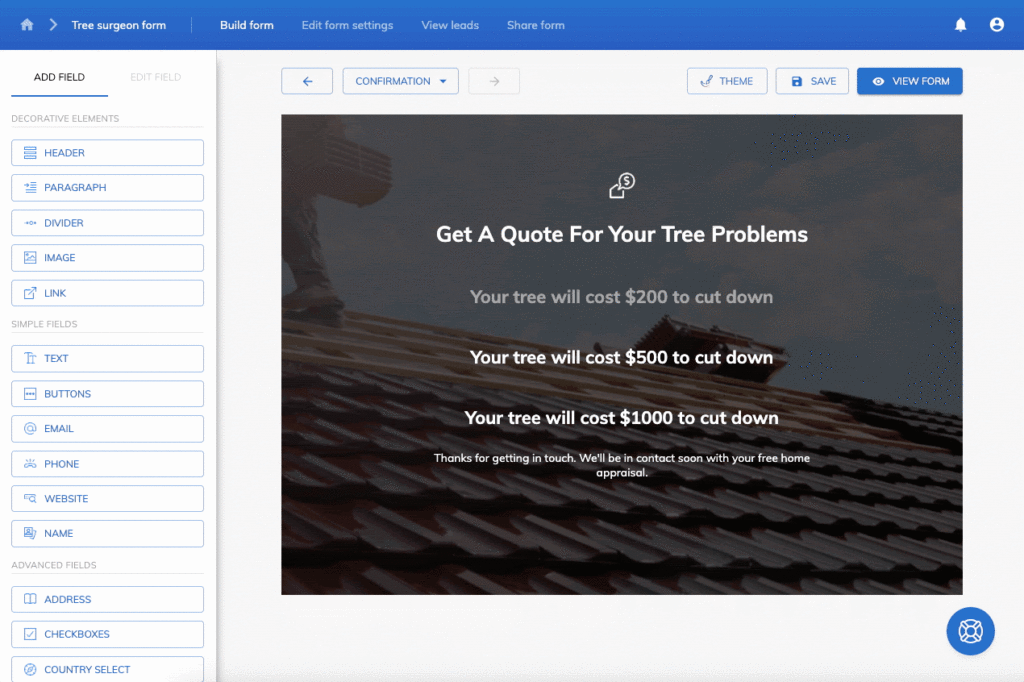
The setup takes a few minutes and is covered in how to add a Growform multi-step form to WordPress.
Key features
- Multi-step forms with conditional logic. Questions sit on separate steps, and conditional logic shows, hides or skips steps based on earlier answers, so a lead that does not fit can be sent to a different ending.
- An embed that needs no plugin. The form embed is a single script tag. The form matches its height to each step and passes the page's URL parameters, cookies and referrer into hidden fields.
- Tracking built for paid traffic. Hidden fields capture UTMs and click IDs on every plan, and ad conversion events fire for Google Ads, Meta, Microsoft Advertising and X with a setting for qualified leads only.
- Lead validation and consent proof. From the Professional plan, phone numbers are checked through Twilio Lookup and email addresses through ZeroBounce while the lead is still on the page, and TrustedForm and Jornaya record consent evidence for leads you sell.
- Delivery. Webhooks, email alerts and 7,000+ apps through Zapier on every plan, so leads reach HubSpot, GoHighLevel, Google Sheets or a lead distribution platform the moment they are submitted.
- 250+ templates and 25+ field types. Start from a template for your vertical, then change the fields, colors, fonts and CSS to match your site.
Pricing

- Basic ($79 a month, or $63 billed yearly): 300 leads a month, up to 3 active forms, no Growform branding, embedding on one domain.
- Professional ($139 a month, or $109 billed yearly): 1,000 leads a month, up to 15 active forms, unlimited domains, Twilio and ZeroBounce validation, TrustedForm and Jornaya, custom domains and Google Tag Manager.
- Scale ($249 a month, or $199 billed yearly): 3,000 leads a month, up to 50 active forms, everything in Professional.
- Custom: thousands of leads a month, unlimited forms, an uptime SLA and custom integrations, priced on a call.
Every plan starts with a 14-day free trial and no credit card.
Pros
- Multi-step forms, logic, UTM capture and ad tracking on every plan
- One snippet on any page builder, with nothing to install or update in WordPress
- Real-time lead delivery through webhooks and Zapier
- Phone and email validation and consent certificates for leads you sell
2. WPForms
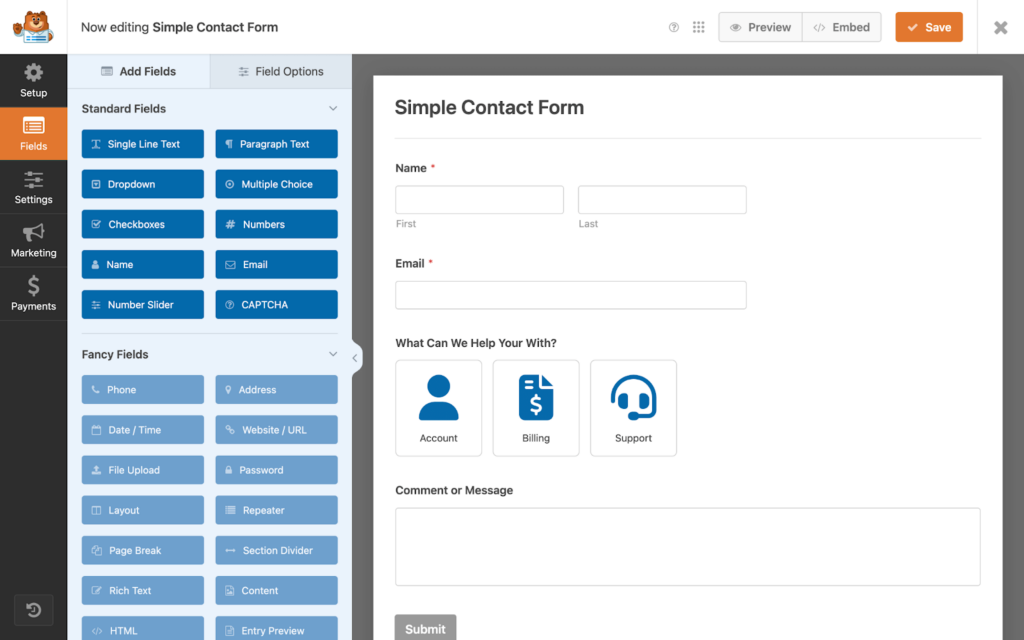
WPForms is the most installed WordPress form plugin, with more than 5 million active installations and a 4.8 rating on WordPress.org. It has a drag-and-drop builder, a large template library and a free Lite version, and it is the plugin most WordPress agencies reach for first.
Key features
- Templates and builder. A drag-and-drop builder with a library of pre-built form templates.
- Conditional logic, hidden fields and multi-page forms. All three come with the Basic license, including a progress bar on multi-page forms.
- Integrations by tier. Zapier, Lead Forms, Form Abandonment and Conversational Forms come with Pro. Webhooks, HubSpot, Salesforce and Pipedrive come with Elite.
- Payments. Stripe, Square, PayPal and Mercado Pago on Pro, with recurring subscriptions and coupons.
Pricing
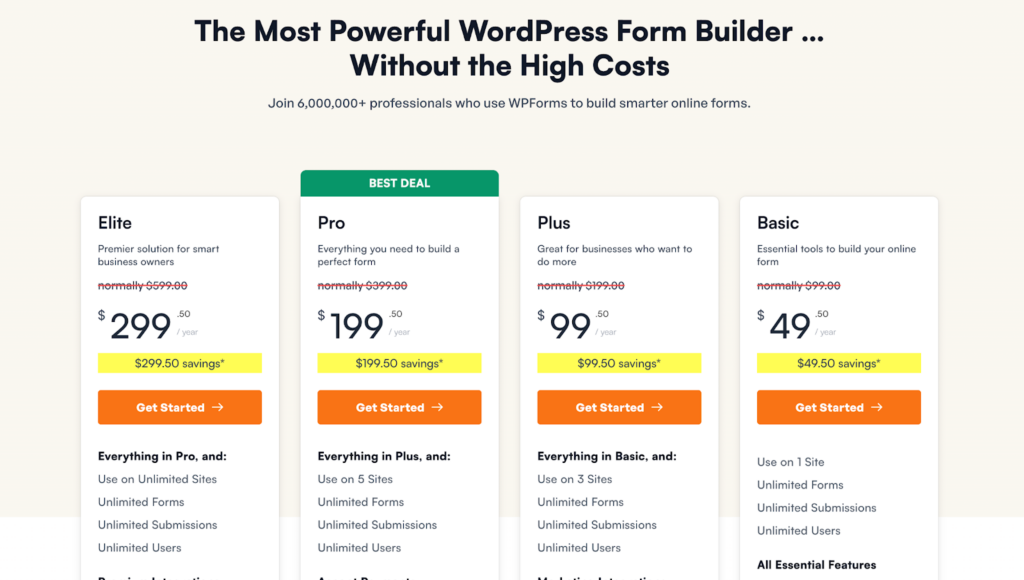
- Basic ($49.50 for the first year, $99 at renewal): one site, unlimited forms and submissions.
- Plus ($99.50 for the first year, $199 at renewal): three sites, marketing integrations.
- Pro ($199.50 for the first year, $399 at renewal): five sites, payments, Zapier, the lead generation add-ons.
- Elite ($299.50 for the first year, $599 at renewal): unlimited sites, webhooks and the CRM integrations.
The pricing page shows every plan at half price with the footnote that all renewals are at full price.
Pros
- The largest install base of any WordPress form plugin
- Logic, hidden fields and multi-page forms on the cheapest license
- Payments, surveys, quizzes and user registration on Pro
Cons
- Entries in the free Lite version are not stored by default
- Zapier waits for Pro and webhooks for Elite, which is $599 a year at renewal
- Requires a self-hosted WordPress site
3. Gravity Forms
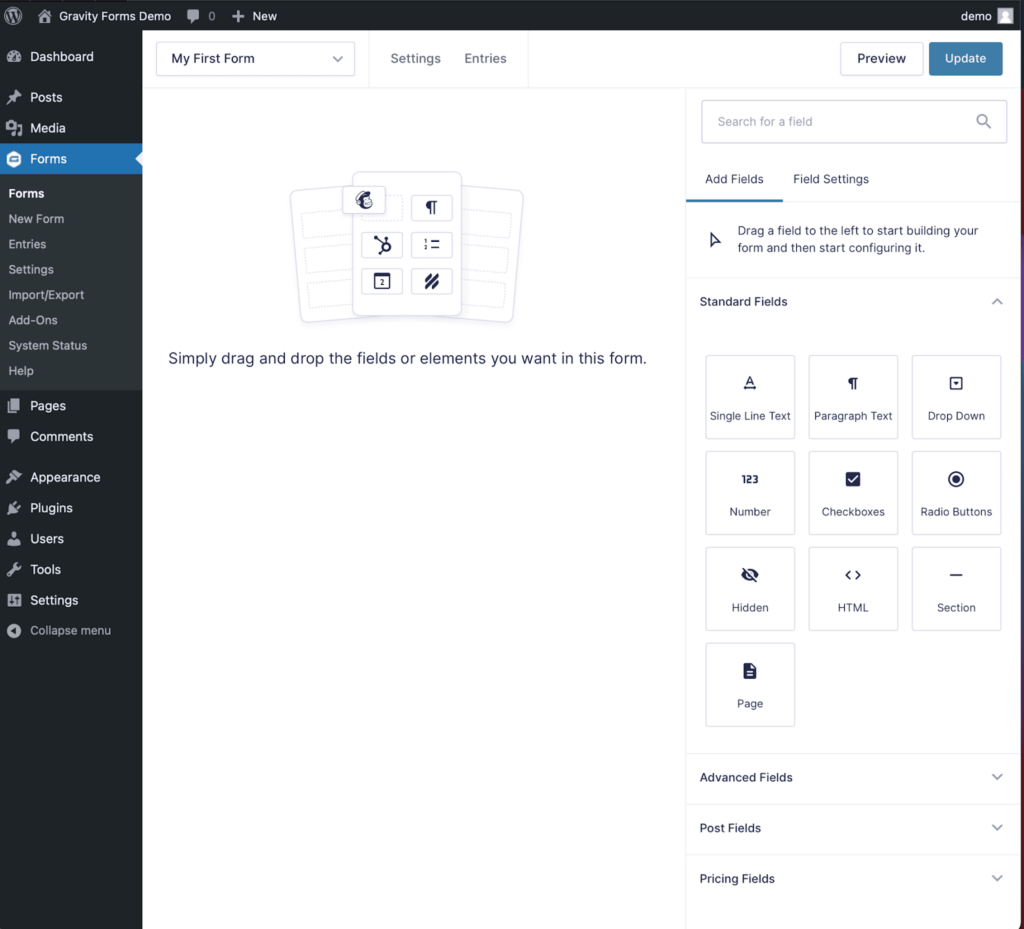
Gravity Forms has been sold since 2008 and is the plugin developers tend to prefer. Multi-page forms and conditional logic are in the core plugin on every license, entries are stored in the site's own database with a REST API, and hundreds of hooks and filters let a developer change almost anything.
Key features
- Conditional logic and multi-page forms in core, with a progress bar.
- Entries in your database, with import and export and a REST API.
- Add-ons by license. HubSpot and the email marketing add-ons come with Basic, Zapier and the payment add-ons with Pro, and webhooks, Partial Entries, Conversational Forms, Google Analytics and Salesforce with Elite.
- Developer tooling. An extensive API and hundreds of actions and filters.
Pricing
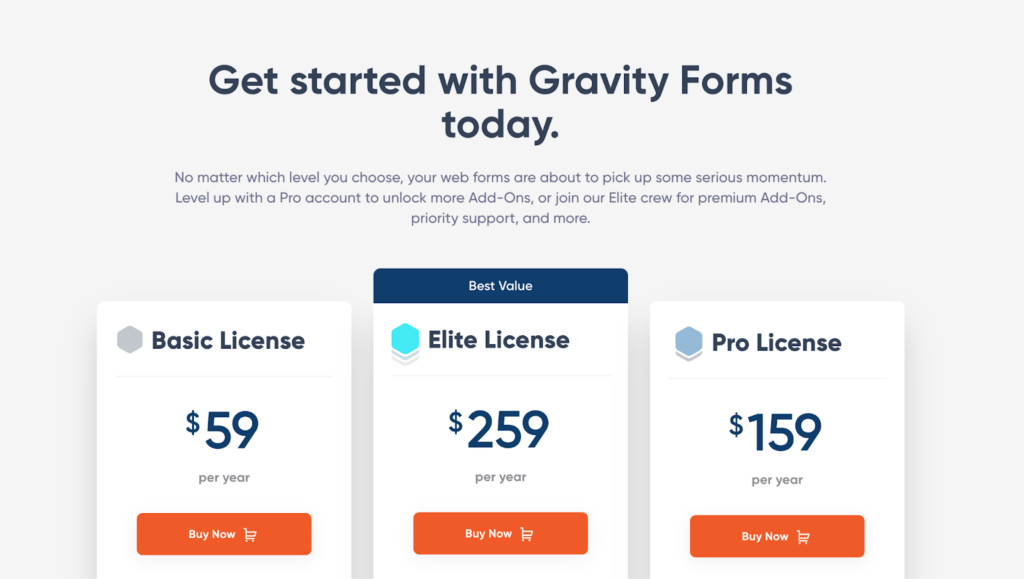
- Basic ($59 a year): one site, standard support.
- Pro ($159 a year): three sites, Zapier and the payment add-ons.
- Elite ($259 a year): unlimited sites, priority support and every add-on.
There is no trial. Gravity Forms offers documentation and an online demo instead, and the pricing page states no limit on entries or forms.
Pros
- Stable, long-established and well documented
- Multi-page forms and logic on every license
- The most extensible plugin here for developers
Cons
- Webhooks and Google Analytics are Elite add-ons
- No trial version
- Updates, including security fixes, stop when the license lapses
4. Formidable Forms
Formidable Forms is aimed at people who need more than a contact form. Its Views feature displays submitted data on the front end, it has calculators for quotes and estimates, and it takes one-time and recurring payments through Stripe and PayPal, with Authorize.net and a WooCommerce form action on the higher licenses.

Key features
- Views. Display form data on pages as tables, charts or directories.
- Calculated fields. Quote, pricing and estimate calculators built from numeric fields.
- Payments. One-time and recurring payments through Stripe and PayPal, with no Formidable transaction fee on a valid license.
- Integrations. Zapier, Google Sheets, HubSpot and Salesforce on the higher licenses, plus the Formidable Forms API.
Pricing
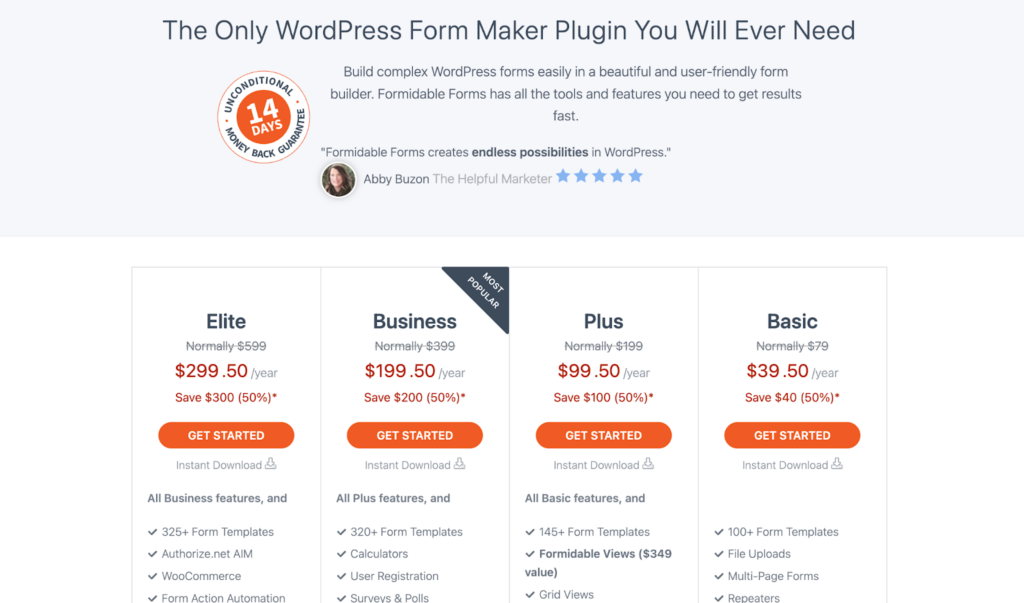
- Basic ($39.50 for the first year, normally $79): one site.
- Plus ($99.50 for the first year, normally $199): up to three sites.
- Business ($199.50 for the first year, normally $399): up to seven sites.
- Elite ($299.50 for the first year, normally $599): unlimited sites.
As with WPForms, the footnote says the introductory pricing is special and renewals are at full price.
Pros
- The strongest choice here for form-driven applications and calculators
- Views turn submissions into front-end content without code
- A free Lite version on WordPress.org
Cons
- Every license renews at double the first-year price
- Calculators, surveys and payments sit on the Business license and above
5. Ninja Forms
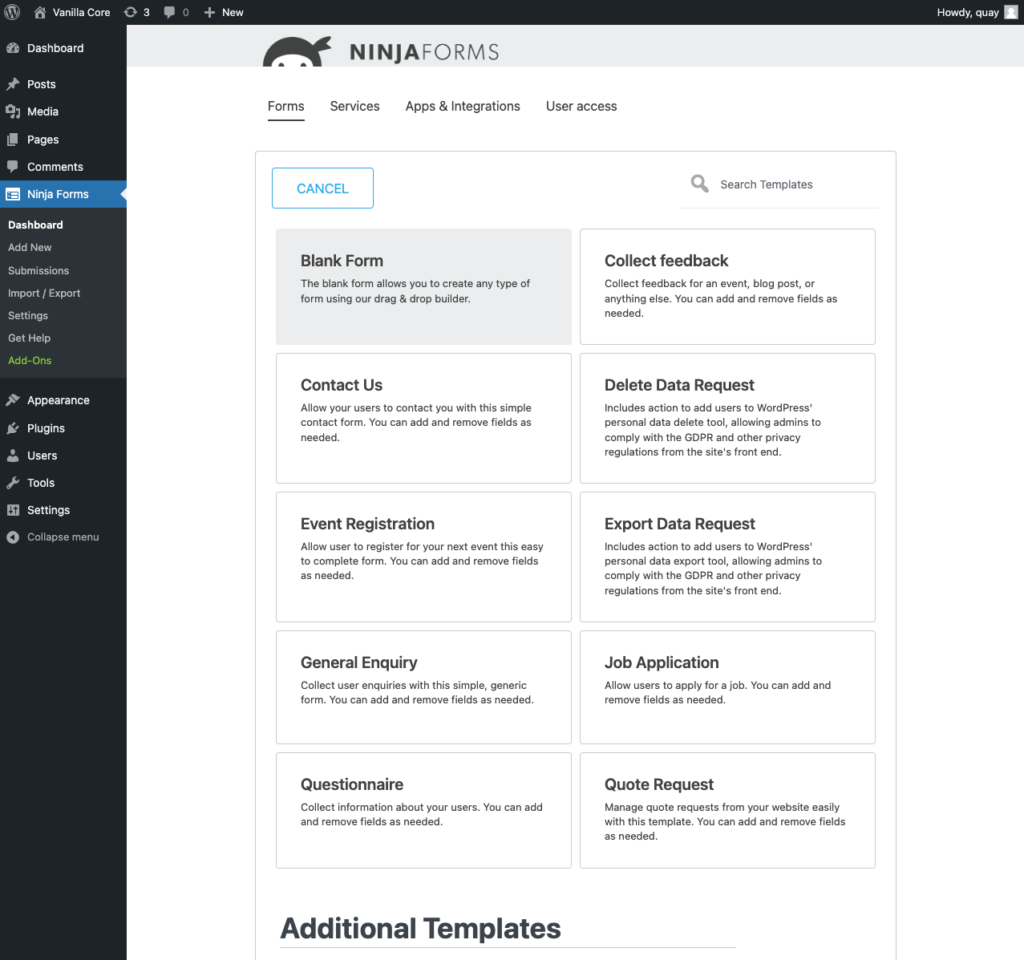
Ninja Forms sells a free Core plugin and then either memberships or add-ons bought one at a time. The free version stores unlimited submissions in your database and sends unlimited email notifications, which makes it one of the more generous free tiers among the plugins.
Key features
- Free Core plugin with unlimited submissions, notifications, success messages and redirects.
- Add-ons à la carte. Conditional Logic ($49), Multi Step Forms ($29), Layout and Styles ($49), Webhooks ($49) and Zapier ($29) can each be bought for a single site, with higher prices for 5 and 20 sites (read 1 October 2026).
- Memberships. Plus includes Conditional Logic and Multi Step Forms, Pro adds Zapier and the CRM add-ons, and Elite adds webhooks and User Analytics.
- Submission management in the WordPress dashboard, with filtering and export.
Pricing
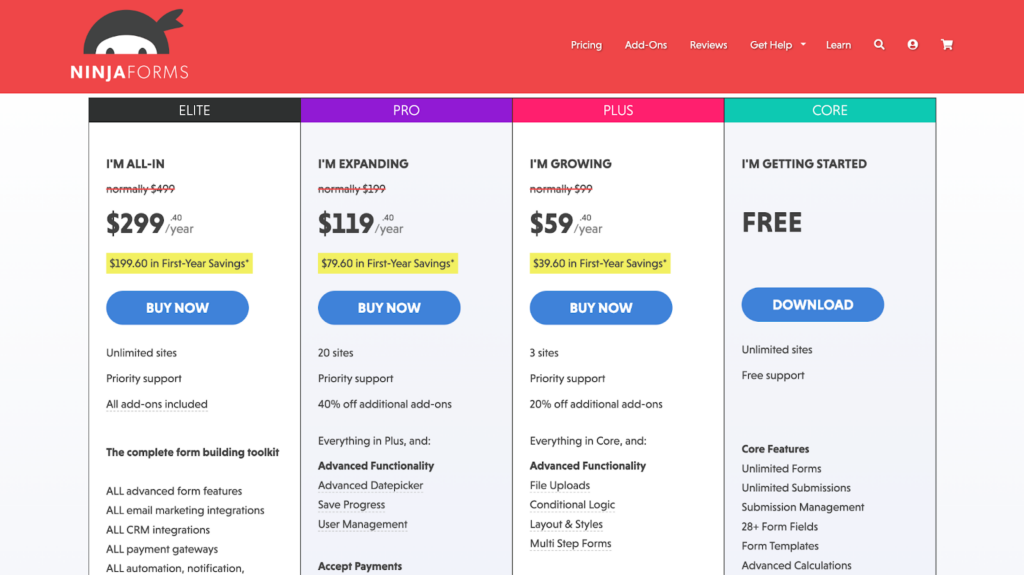
- Core: free.
- Plus ($59.40 for the first year, $99 at renewal): three sites.
- Pro ($119.40 for the first year, $199 at renewal): twenty sites.
- Elite ($299.40 for the first year, $499 at renewal): unlimited sites and every add-on.
Memberships are 40 percent off in the first year and renew at the full price. A lapsed license keeps working without updates or support.
Pros
- The free Core plugin stores every submission
- You can buy only the add-ons you need
- Support with a stated 24-hour target on paid memberships
Cons
- Conditional logic and multi-step forms are paid add-ons
- Webhooks sit on the Elite membership or cost $49 per site alone
6. Forminator
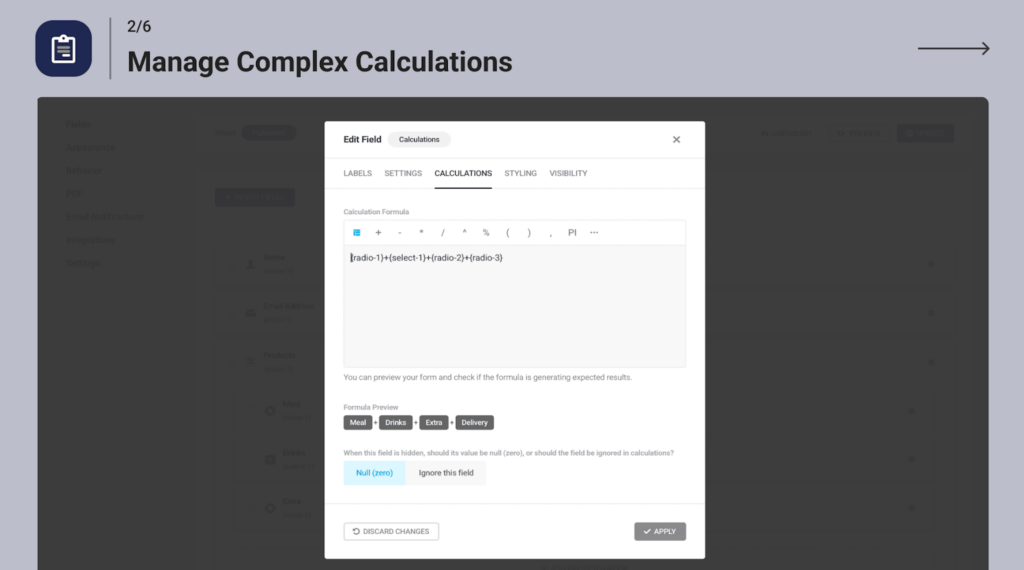
Forminator is the form builder from WPMU DEV. The free plugin on WordPress.org has more than 600,000 active installations and a 4.8 rating, and it covers contact forms, polls with real-time results, quizzes, service estimators and registration forms with PayPal and Stripe payments. The Pro version adds Stripe subscriptions, PDF generation, geolocation and an e-signature field.
Key features
- Forms, polls and quizzes in one plugin.
- Payments through Stripe and PayPal, with Stripe subscriptions on Pro.
- E-signatures and PDFs on Pro.
- Integrations with HubSpot, ActiveCampaign, Google Sheets, Mailchimp, Trello and Slack, plus webhooks for Zapier, Make and n8n.
Pricing
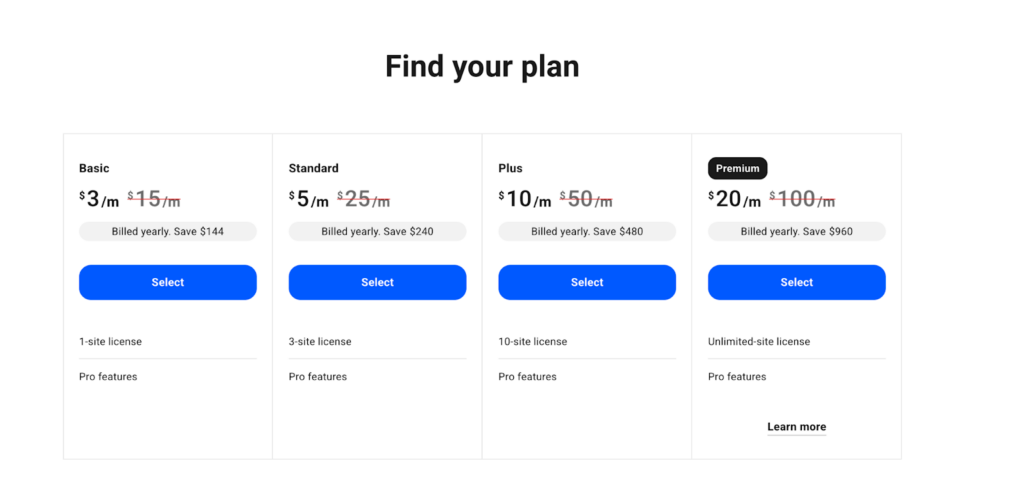
WPMU DEV sells Forminator Pro as a plugin plan or as part of its Premium membership:
- Pro Basic ($50 a year): one site.
- Pro Standard ($75 a year): three sites.
- Pro Plus ($100 a year): ten sites.
- Premium ($9.99 a month, $4.99 for the first three months): unlimited sites and every WPMU DEV Pro plugin.
All plans carry a 30-day money-back guarantee.
Pros
- A full-featured free version with a large install base
- Quizzes, polls and e-signatures in the same plugin
- Low yearly prices for one to ten sites
Cons
- Subscriptions, PDFs and e-signatures need the Pro plan
- The Premium membership bundles plugins you may not use
7. Jotform
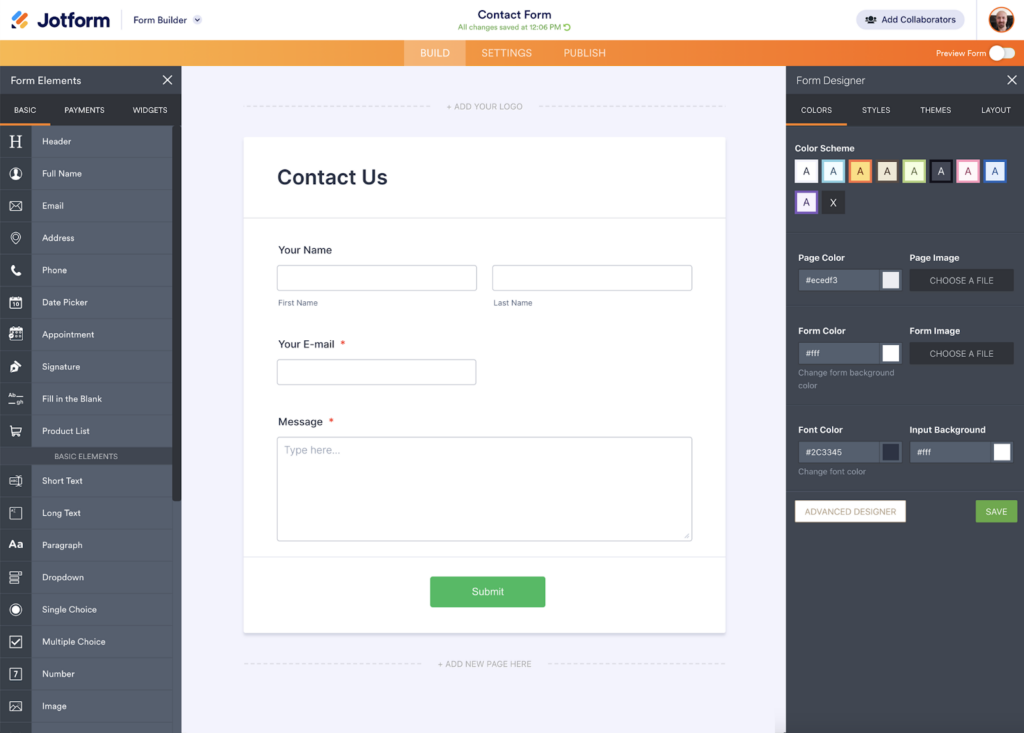
Jotform is a hosted form builder rather than a plugin, so it works on WordPress the same way Growform does: build the form in Jotform and embed it. It has one of the largest template libraries of any form tool, 150+ integrations and products for PDFs, e-signatures and approvals around the form itself.
Key features
- Templates. A large template library covering applications, registrations, orders, feedback and more.
- Payments. Payment gateways with no Jotform percentage taken on payments collected through a form.
- Integrations. 150+ integrations, plus webhooks and conditional logic on every plan.
- The wider suite. PDF forms, Jotform Sign, approvals and workflows.
Pricing

- Starter (free): 5 forms and 100 submissions a month.
- Bronze ($39 a month, or $34 a month billed yearly): 25 forms and 1,000 submissions a month.
- Silver ($49 a month, or $39 a month billed yearly): 50 forms and 2,500 submissions a month.
- Gold ($129 a month, or $99 a month billed yearly): 100 forms and 10,000 submissions a month.
- Enterprise: custom pricing, unlimited usage.
Pros
- Works on any website, not only WordPress
- A generous free plan and a huge template library
- Webhooks and conditional logic with no plan restriction
Cons
- Reaching a monthly limit disables the forms, which show "Form over quota" until the usage resets
- Submissions and form views are counted across the whole account
8. Fluent Forms
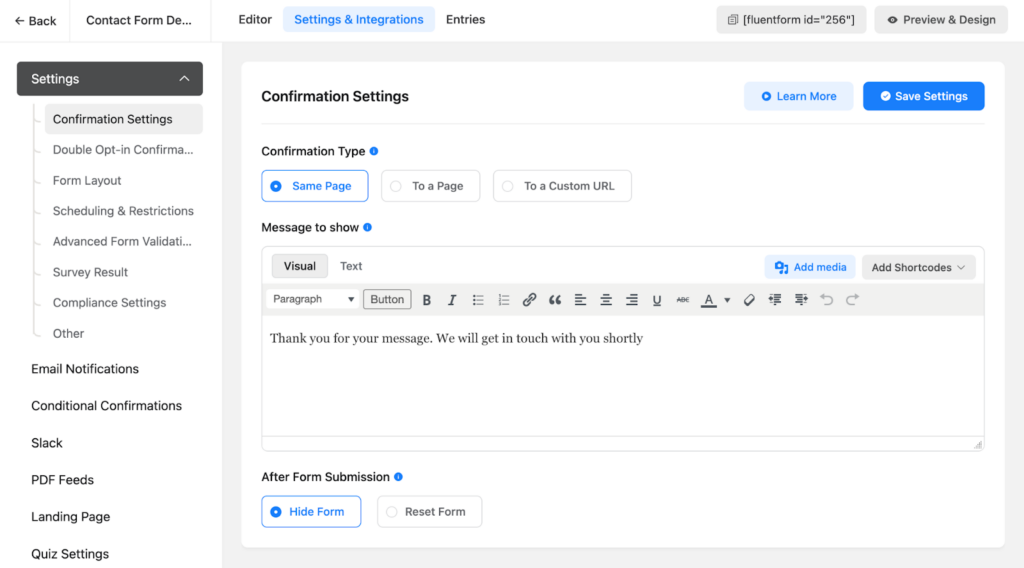
Fluent Forms is the lightweight plugin in this list, with more than 700,000 active installations and a 4.8 rating on WordPress.org. The free version covers a lot of ground, and the paid version adds payment fields, calculators, conversational forms and a one-click migration from other form plugins.
Key features
- Advanced fields. Range sliders, repeat fields, post selectors, chained selects and a Net Promoter Score field.
- Calculators and quizzes built from numeric fields and logic.
- Payments through PayPal, Stripe, Square, Mollie, Authorize.net and other gateways on Pro.
- Migration from WPForms, Contact Form 7, Gravity Forms, Ninja Forms and Caldera Forms in one click.
Pricing
Fluent Forms sells annual and lifetime licenses. On 9 October 2026 the annual licenses were $79 a year for one site ($63 with the first-year discount), $159 for five sites ($127) and $299 for unlimited sites ($239). Lifetime licenses were $349 for one site ($279 at the discount), $599 for five ($479) and $899 for unlimited ($719). The page does not state the renewal price of the annual licenses.
Pros
- Fast and light, with a capable free version
- Lifetime licenses for sites that will not change
- Strong conditional logic and payment support
Cons
- Payment gateways and the reporting dashboard need Pro
- Lifetime pricing is a large upfront cost for one site
How to choose a WordPress form builder
Three questions settle most decisions.
Where should the submissions live? If the answer is "in WordPress", pick a plugin. Gravity Forms, Fluent Forms and Ninja Forms Core all store entries in your database on every license, and WPForms does so on every paid license. If the answer is "in my CRM, as fast as possible", pick the tool with webhooks and Zapier on the plan you can afford. For WPForms that is Pro and Elite, for Gravity Forms it is Pro and Elite, for Ninja Forms it is Pro and Elite, and for Growform and Jotform it is every plan.
What does the renewal cost? WPForms, Formidable Forms and Ninja Forms all show a first-year discount and renew at the full price, so compare the second-year figure. Gravity Forms and Fluent Forms show one price. Growform and Jotform charge monthly or yearly with no introductory rate.
Is the form a contact form or a lead form? A contact form needs to work and look right, and every plugin here does that. A lead form on paid traffic needs to be split into steps, qualify the lead, keep the UTMs and click IDs that came with the visitor, fire a conversion event back to the ad platform and reach sales before the lead cools. Growform does all of that on its Basic plan, with phone validation and consent certificates from Professional, and it is the reason this list puts a hosted tool first for lead generation.
Growform on WordPress
Growform is a multi-step form builder made for lead generation. The form is built in Growform, embedded in WordPress with one script tag, and every submission arrives in your CRM or webhook in real time with its UTMs and click IDs attached. There is no plugin to install, update or style, and the form looks the same whether your pages are built in Gutenberg, Elementor or Bricks.
Every plan starts with a 14-day free trial and no credit card. Start free trial.
Frequently asked questions
What is the best form builder for WordPress?
It depends on the job. For contact forms that live inside WordPress, WPForms, Gravity Forms, Fluent Forms, Formidable Forms and Ninja Forms are all mature plugins with free or low-cost entry points. For lead forms on paid traffic, Growform is built for the job: multi-step forms, conditional logic, UTM capture, ad conversion tracking and lead delivery come on every plan, and nothing is installed on the site.
Do I need a plugin to add a form to WordPress?
No. A plugin is one route, and the form then runs on your server and stores entries in your WordPress database. The other route is a hosted form builder such as Growform or Jotform, which gives you a snippet to paste into a Custom HTML block. The form loads from the builder's servers and the plugin list stays as it is.
Is there a free WordPress form builder?
Yes. WPForms Lite, Ninja Forms Core, Fluent Forms, Formidable Forms Lite and Forminator each have a free version on WordPress.org, and Jotform has a free Starter plan with 5 forms and 100 submissions a month. The free plugins differ in what they store: WPForms Lite does not keep entries by default, while Ninja Forms Core stores unlimited submissions. Growform has a 14-day free trial rather than a free plan.
Which WordPress form plugin is best for lead generation?
Among the plugins, WPForms (Pro and Elite), Gravity Forms (Elite) and Ninja Forms (Elite) add the Zapier and webhook connections a lead funnel needs on their higher licenses. Growform includes webhooks, Zapier, hidden fields for UTMs and ad conversion tracking on every plan, with TrustedForm, Jornaya and phone validation from the Professional plan, so it is the better fit when the form exists to produce leads from paid traffic.
Will a form plugin slow down my WordPress site?
Any plugin adds code to your pages, and a form plugin with many add-ons adds more. How much it costs you depends on the theme, caching and the other plugins you run, so test with a tool such as PageSpeed Insights after installing one. A hosted form such as Growform loads from a single script tag and its definition is cached at the edge, so the WordPress page itself stays unchanged.
Related articles
Jotform pricing 2026: every plan, every limit and what a lead form costs
Jotform costs $39, $49 or $129 a month, or $408, $468 or $1,188 a year, and the free plan stops at 100 submissions. Every plan and limit, checked October 9, 2026, plus what a lead form really costs.
October 9, 2026

6 Best Form Builders for ClickFunnels Lead Funnels
September 30, 2026

7 Best Quiz Builders for Lead Qualification Funnels
Paid traffic lead funnels rarely fail because the quiz looked boring.
September 30, 2026