
Our 5 Proven Inbound Lead Generation Strategies To Attract Qualified Leads

Updated Published 8 min read
This article breaks down proven inbound lead generation strategies to attract qualified leads. From content hubs to gated content, each strategy is chosen for its ability to attract high-quality leads and drive real results. You’ll find practical, tested ideas you can apply right away, and how Growform complements these strategies. Visit our blog for more useful lead generation strategies and tips.
Are You Considering Inbound Lead Generation?
Inbound lead generation helps you attract potential customers by giving them value first. This could be a helpful blog post, a free tool, or a useful resource, something that answers a question or solves a small problem.
It works because it builds trust early. When people find useful content on your site, they’re more likely to remember you and take action when they’re ready to buy.
In this Growform article, we share inbound lead generation strategies you can start using today to attract better leads and increase conversions. We also included a real-world scenario where each strategy has been successfully applied.
What Is Inbound Lead Generation?
Inbound lead generation is a strategy where potential customers discover and engage with your business through valuable content and experiences. Instead of reaching out directly like in outbound lead generation, you create resources that address their needs and draw them in organically.
It works best when you:
- Understand what your audience needs
- Provide consistent, high-quality content
- Support their decision-making step by step
When people already see value in what you offer, they’re more likely to become real leads and customers.
Top 5 Inbound Lead Generation Strategies That Work
1. Build Search-Engine Optimized Content Hubs
Content hubs are organized clusters of related articles linked through a comprehensive “pillar” page. This structure boosts SEO, helps users find what they’re looking for, and positions your brand as an authority on a topic.
Here’s how to structure a search-engine optimized hub:
- Cover Relevant Topics: For example, if you own a productivity app, you might build a hub around “Remote Team Collaboration,” including guides on tools, workflows, and time zone management. Start by creating a pillar page, an in-depth resource that broadly addresses the core topic. Then, use keyword research tools like SEMrush or Ahrefs to identify and prioritize subtopics to cover in supporting articles.
- Implement Effective Internal Linking: Once your pillar page and supporting articles are live, link each article back to the pillar page and, where relevant, to each other. This helps search engines understand that the pillar page is the main source of information on the topic. Tools like Yoast SEO or HubSpot Topic Clusters can help with the organization.
- Add Visual Navigation Elements: You can also boost user engagement by adding visual navigation elements. An example (as shown below) is a sidebar with related articles, which keeps your readers on your site longer.
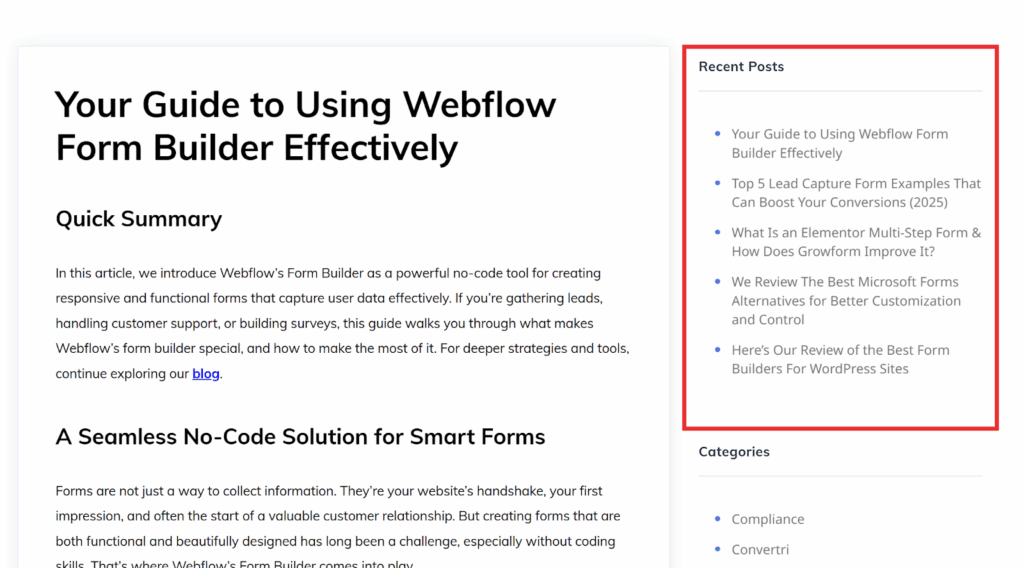
Doing these can help you drive compounding traffic growth effectively. For instance, when Belkins.io revamped its site with a content hub strategy in partnership with Mole Street, they saw a 263% increase in organic traffic, a 311% rise in clicks from Google, and an 800% boost in organic conversions in six months.
2. Create Interactive Tools and Calculators
Interactive tools like calculators, quizzes, or assessments give users a hands-on way to engage with your product or service. They’re especially effective for SaaS and service-based businesses that benefit from showing value early.
Here’s how to build the tools that attract leads:
- Identify a Specific Problem to Solve: Think about common questions your audience asks. For example, a marketing agency might create a “Digital Ad Budget Estimator” or a “Lead Quality Score” quiz.
- Choose the Right Tool Builder: Use an easy tool builder to create your tool without writing code. Growform, for example, lets you build multi-step calculators with conditional logic and hidden fields on your forms.
- Embed Contextual CTAs: Once users receive their result, add a relevant call-to-action like “Get My Personalized Plan” or “Book a Free ROI Review.” These CTAs work best when placed directly below the tool output.
- Optimize Placement and Visibility: Place the tool on high-traffic pages, landing pages, or within blog content. Make sure it loads quickly and is mobile-responsive to reduce drop-off.
When executed well, interactive tools can deliver high engagement and qualified leads. A typical example of this was when Salesforce launched the Sales Cloud Einstein ROI Calculator. It achieved an average visit duration of 19 seconds and attracted traffic primarily through direct visits (49.88%) and organic search (36.44%).
It also ranks for top keywords like “einstein readiness report” and “einstein capabilities salesforce roi.” It served as an effective way to help businesses assess and optimise their return on investment.
With Growform, you can easily create multi-step forms and calculators without needing to code. With features like conditional logic and hidden fields, you can build tools that adapt to user input and deliver more relevant experiences.
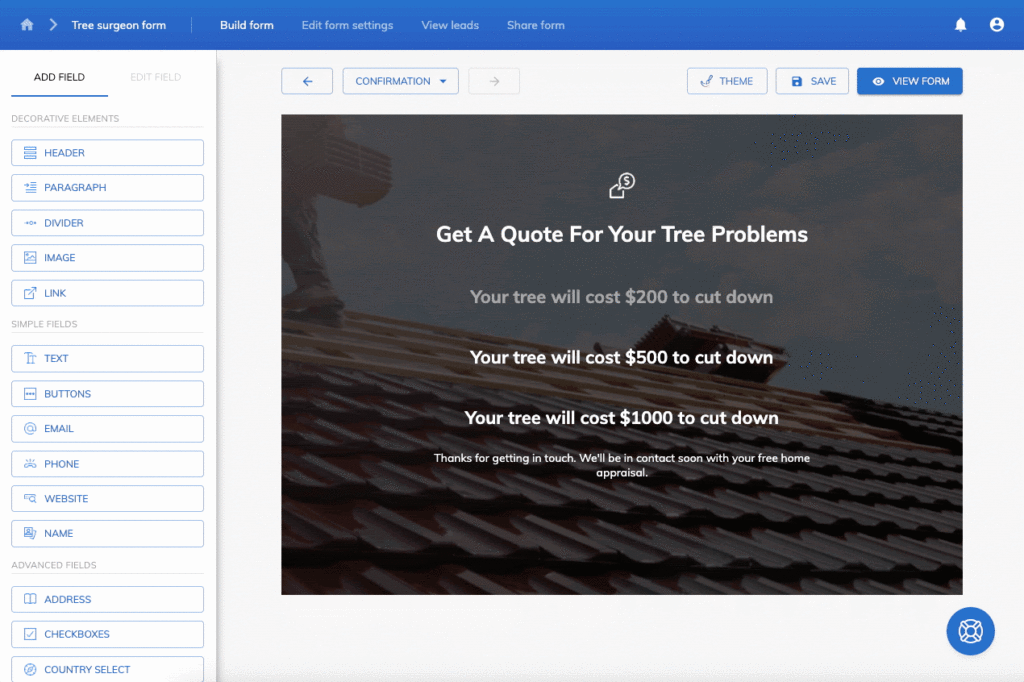
Check our guide on How to Create Calculator Forms with Growform to get started.
3. Host Webinars and Live Q&A Sessions
As a lead generation strategy, webinars and live Q&A sessions allow you to connect directly with your audience, build trust in real time, and position your brand as a go-to expert. They’re very much needed when you have complex products or services that benefit from explanation and interaction.
Follow these steps to plan and execute effective sessions:
- Choose Topics That Solve Real Problems: Focus on challenges your audience actively faces that ties to a solution your product or service offers. For example, a B2B onboarding software company might host a webinar on “How to Automate Client Onboarding in Under 30 Minutes.”
- Promote Across Multiple Channels: Use email campaigns, social posts, and your website banner to build attendance. Webinar tools like Livestorm, Zoom, or Demio also offer built-in registration forms and reminders.
- Use Interactive Features to Boost Engagement: Encourage attendees to participate via polls, chat, and live Q&A. These tools not only keep people engaged but also reveal their interests and potential objections.
- Follow Up Based on Attendee Behavior: Segment follow-up emails based on engagement. For example, you can send product demos to those who asked pricing questions, or additional resources to those who downloaded slides.
This format doesn’t just generate leads, it builds relationships. For example, a consulting firm partnered with Rally Point Webinars to host a session based on a popular white paper. By targeting both their existing contacts and a rented list, they secured 60 qualified registrations from their own audience and generated over 100 new leads overall.
4. Set Up Email Nurture Sequences
Email nurture sequences are planned sets of emails that guide leads through the buying process by sharing useful content and following up at the right time based on their stage in the funnel. They help keep your brand top of mind and move prospects toward a decision.
How To Implement It
Here’s how you can set up your email nurture sequence:
- Segment Your Audience by Behavior or Demographics: Start by grouping leads based on a common trait. This could be how they signed up, what content they engaged with, or attributes like industry or job title.
- Map Content to Each Stage of the Funnel: Next, you want to create content that matches each group’s needs and questions. For instance, you can send introductory content to new leads (e.g., “What is X?”), mid-funnel resources like case studies to evaluators, and promotional offers to those showing buying intent.
- Automate the Workflow: You don’t have to do this manually. Use platforms like Mailchimp, ActiveCampaign, or HubSpot to build sequences that trigger based on user actions like downloads, page visits, or inactivity.
- Monitor and Refine Based on Engagement: There’s always room for improvement. Track open rates, clicks, and conversions to see what works. Test subject lines, timing, and content types to improve performance over time.
A great example comes from Yokel Local, who implemented a nurture sequence for a LASIK clinic. The automated campaign delivered timely, segmented emails and converted leads into paying customers, showing how structure and timing drive results.
With Growform, you can build multi-step forms that capture detailed lead data upfront, making it easier to segment and personalize your nurture sequences from day one.
5. Offer Lead Magnets with Gated Content
Lead magnets are high-value resources offered in exchange for contact information, usually an email address. When positioned well, they convert casual visitors into qualified leads by solving a clear, immediate need.
Here’s how to create gated content that attracts leads:
- Choose a Topic with Clear Utility: Pick a subject your audience actively searches for. For example, if you’re an HR platform, you might offer a “Remote Hiring Checklist” or “Interview Questions Template.” Just make sure it solves a real, time-sensitive problem.
- Create Content That’s Worth the Exchange: Once you know what your audience wants, create a magnet they can’t resist. Something that feels like a shortcut or insider resource. Formats that work well include eBooks, templates, calculators, mini-courses, or checklists, delivered in PDF or interactive form. A good example is Neil Patel’s 7-week action plan, designed to help businesses improve SEO and drive traffic. It’s a bait that catches the attention of anyone in SEO in need of more traffic.
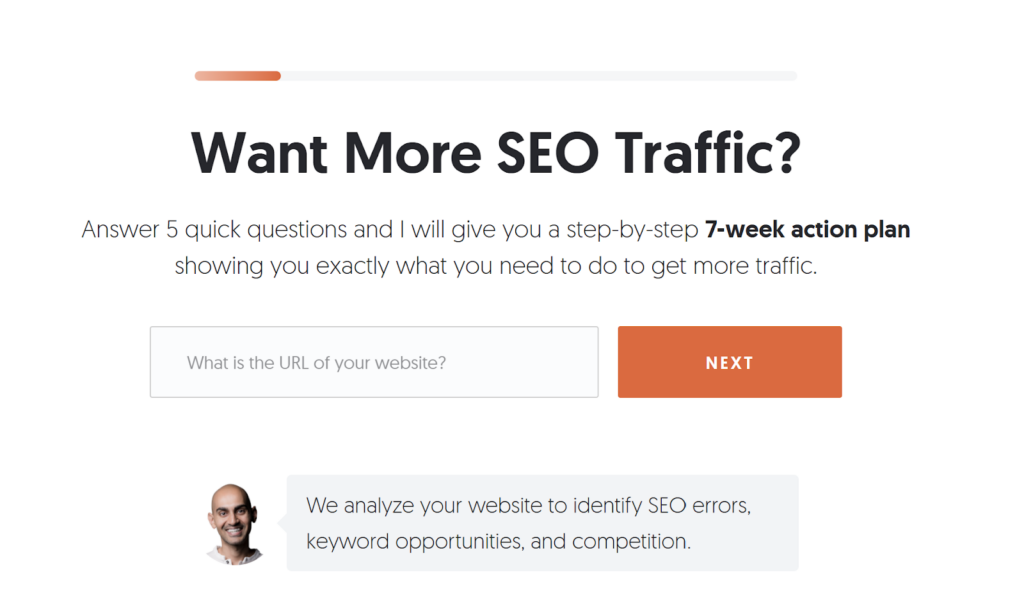
- Make Your Lead Magnets Visible: Promote your lead magnet to where your visitors are. Using Neil Patel’s 7-week action plan, for example, it’s a web pop-up that’s literally in your face once you land on his website. The copy also makes it hard to resist, because who doesn’t want more traffic? There are lots of ways to make your lead magnets visible. Suitable channels include:
- Blog posts with related topics
- Landing pages linked from paid ads
- Email sequences targeting the right stage
- Social media posts (with a clear call to action)
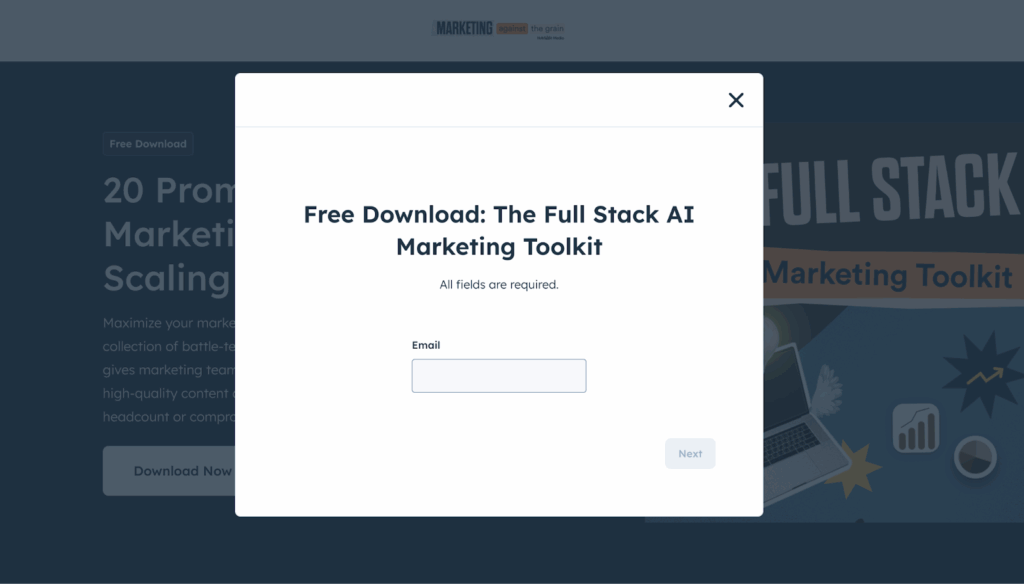
- Use a Smart Form to Gate Access: Irrespective of the channel, you need to build a lead capture form that collects essential data like name, email, and role. For example, HubSpot locks this AI marketing toolkit behind a lead capture form that requests your details. If you need this tool, you have to enter your email address.
- Connect to Your CRM or Email Platform: Finally, integrate the smart form with your marketing tools (e.g., Mailchimp, HubSpot, or Salesforce) for instant lead handoff and follow-up.
Growform helps teams build multi-step forms with features like conditional logic and hidden fields, making it easier to capture the right data at the right time. Our extensive integrations with hundreds of platforms ensure a smooth handoff of leads into your systems.
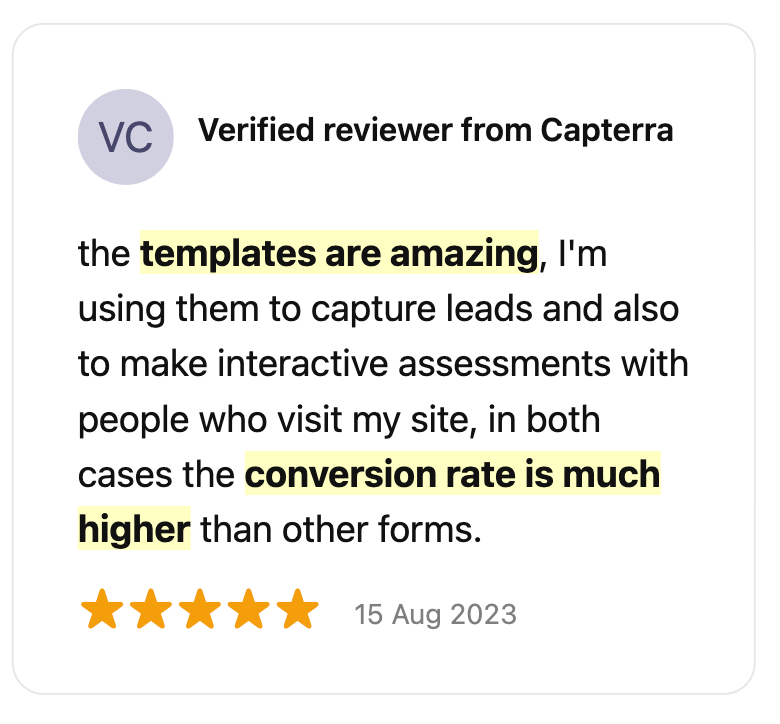
For example, this client had a much higher conversion rate by combining gated content with Growform to capture leads as part of their inbound strategy.
Power Your Inbound Lead Generation Efforts with Growform
Inbound lead generation works best when you give people a reason to come to you through content, tools, and real conversations. The strategies above help you attract better leads, build trust, and convert interest into action.
Growform makes it easy to create high-converting forms that support your inbound efforts. With multi-step layouts, conditional logic, and seamless integrations, you can capture more qualified leads without writing a line of code.
Start building more effective forms today with Growform with a 14-day free trial.
Related articles

7 Best Lead Routing Tools for Real-Time Lead Handoffs
October 13, 2026

Quiz Funnels vs Multi-Step Forms for Lead Generation
Paid traffic operators usually ask the wrong first question here.
September 30, 2026