
Solar Lead Generation: Top Tools & Strategies for 2026
September 2026: Updated for the end of the residential solar tax credit, current lead prices and the solar lead generation companies still trading.
 Harvey Carpenter Updated 16 min read
Solar lead generation: top tools & strategies for 2026
September 2026: This article was updated for the end of the residential solar tax credit, current lead prices and the solar lead generation companies still trading.
As the solar industry continues to grow, it becomes increasingly important to stand out from the crowd. If you're an installer or a solar lead gen company in need of more leads, this monster article is for you.
We've gathered the best solar lead generation companies, researched up-to-date lead costs and prepared an actionable guide to generating your own leads. We'll share proven strategies, tips and industry secrets to help you grow your solar leads.
What is solar lead generation?
Solar lead generation is the process of attracting interest from potential solar panel customers and converting that interest to a "lead".
But what does that actually mean?
To explain the process visually, here is a typical display ad…
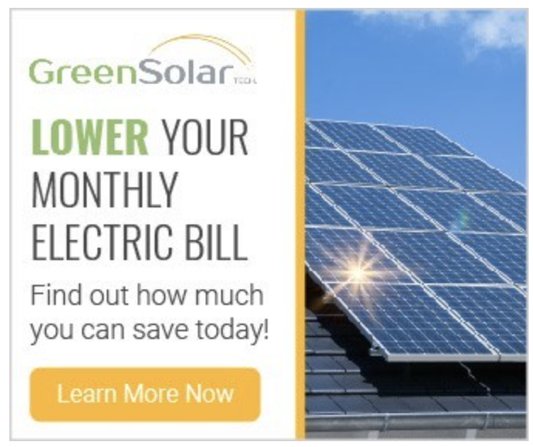
Which sends the user to a form like this…
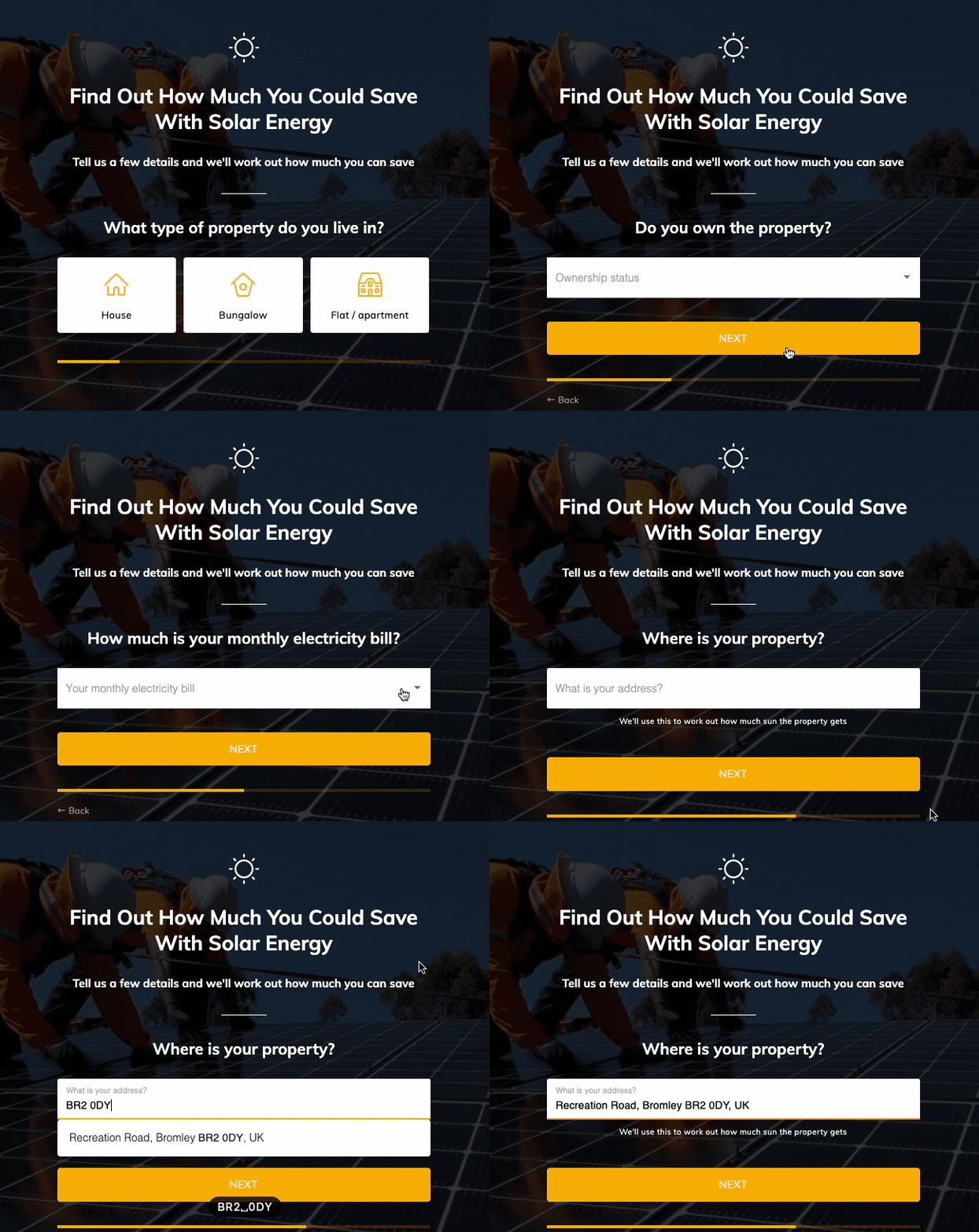
… and is ultimately delivered directly to the solar company's CRM (customer relationship management) tool, like Salesforce.
A typical "lead" will of course include the customer's name and contact information. But it will also include "qualifying" information like the size of their roof and readiness to purchase.
There are other ways of generating leads (like cold calling, canvassing or mining databases), but we're not interested in those spammy tactics. This article is about modern lead generation in 2026.
What changed for solar lead generation in 2026?
The biggest change is the end of the homeowner tax credit. The 30 % residential clean energy credit (section 25D) cannot be claimed for expenditures made after December 31, 2025, and the IRS treats an expenditure as made when the installation is completed, not when it is paid for (IRS instructions for Form 5695). The change came with Public Law 119-21, the One Big Beautiful Bill Act.
Leased systems and power purchase agreements are different. The installer or financier who owns the system can still claim the clean electricity investment credit (section 48E), but only for solar facilities that begin construction by July 4, 2026 or are placed in service by December 31, 2027 (IRS Notice 2025-42). This is the position as of September 30, 2026. Check it with your tax adviser before it goes into an ad.
The market has felt it. SEIA now expects the residential segment to contract by 23 % in 2026 before it returns to growth in 2027, and installers report longer sales cycles and falling close rates (SEIA Solar Market Insight Q3 2026). The demand has not gone away, though. U.S. solar capacity can now power more than 50 million homes, according to SEIA.
For lead generation, that means two things. Ads that promise "30 % back from the government" to a cash buyer are now wrong and should be pulled. And with fewer deals to go round, the cost of a badly qualified lead is higher than it was, so qualification and speed matter more.
What are the benefits of solar lead generation?
There are several benefits to solar lead generation beyond "traditional" marketing practices like flyering or batch-and-blast emails.
For solar product installation companies
A solid solar lead generation process can help:
• Better qualify leads, and do so faster and more efficiently
• Reach more potential customers in a cost-effective way
• Build a scalable, predictable pipeline of revenue
• Stop relying on "pull" marketing and "get out there" during a downturn
For solar lead generation companies
The benefit is simple: money.
Solar lead gen companies make their money with a strategy called "arbitrage".
This means they buy traffic at a relatively low cost from ad networks like Facebook and Google. They then send the users to a high performing landing page and sell the leads to make a profit.
The different types of solar lead
Not all solar leads are created equally. These are the main types of solar lead you'll see on the market today:
Exclusive vs non-exclusive (or "comparison" leads)
Exclusive leads are sold only to you, so your customer won't have spoken to another solar installer.
Non-exclusive (or "comparison leads") are sold to 3-4 companies at a time.
Non-exclusive leads will naturally be less engaged, and come with a risk that you could be undercut completely.
That said, if your prices are competitive and you're fast in responding, non-exclusive leads can work out cheaper.
Pay-per-lead vs revenue share
Pay-per-lead does exactly what it says on the tin. You'll pay a fixed cost for each lead you receive, whether you conclude the sale or not.
Meanwhile, revenue share arrangements mean you'll split the sales revenue you generate from the lead.
The revenue share model reduces risk to you, but will typically be more expensive in the long run.
Why? The lead generation company will want to make additional margin and be compensated for the additional risk on their side.
If you're unsure about lead generation, you should consider starting with a revenue share before moving to a cheaper pay-per-lead model.
Qualified vs unqualified
A qualified lead has been checked to comply with a certain criteria. In other words, it has not been "disqualified".
In reality, nobody sells "unqualified leads". Rather, there is a spectrum of how qualified a solar lead can be.
For example, a basic qualification criteria for a customer might be:
- They are a homeowner
- They spend a certain amount on electricity each month
- There are no obstructions on the roof
Some lead generators use a phone call to qualify leads, whereas others will be qualified on the multi-step form.
Technology also makes this smoother. A homeowner can mark their roof on a satellite map inside the form with a roof picker, and phone numbers can be verified in real time.
How much do solar leads cost? (Updated for 2026)
SolarReviews puts solar leads at between $25 and $300 each, depending on how many companies a lead is sold to and where the homeowner lives. An exclusive web lead in a competitive market like San Diego sits at the top of that range (SolarReviews).
With comparison campaigns, it's possible to buy leads for significantly less, but keep in mind you'll be competing with other providers so will see a lower conversion rate.
The price per lead is only half the picture. SolarReviews reports that installers close 3-7 % of leads, and that many aim to keep the cost per close under $1,500 in competitive markets like California and the Northeast. Judge a lead source on what it costs you per signed contract, not per form fill.
Solar lead generation companies
We've researched the best solar lead gen companies in the USA and UK.
We filtered through hundreds of companies and chose those with the most favorable third party reviews, good levels of transparency and fair pricing models. We last checked each company's site on September 30, 2026.
Solar lead generation companies in the USA
RGR Marketing
RGR Marketing has more than 20 years in lead generation and is one of those companies that consistently comes up when talking to industry professionals.
They have a solid reputation and are transparent about their lead generation process and technology.
Rather uniquely, RGR see themselves as a partner of your org and will help you implement best practices to improve the way you handle their leads.
Peak Marketing Service
Peak Marketing Service provide leads on a pay-per-lead basis, and generate leads from their various web properties in the solar industry, as well as digital marketing campaigns.
They're transparent about costs and processes, and state on their website that exclusive residential solar leads typically cost $40-$175 each, delivered in real time with no long-term contract.
Invention Solar
Invention Solar get a special mention as they're genuinely focused on solar, so will understand the industry better than those with a wide spread.
They provide exclusive real-time leads, as well as live transfers that are passed directly from their sales team to yours while the homeowner is still on the line.
Solar lead generation companies in the UK
Watts Marketing
Watts Marketing have booked solar appointments for UK installers since 2015, and every appointment goes to one installer only.
Their own UK call center screens each homeowner on ownership, credit, roof and electricity spend before the appointment is booked. You pay as you go, with no contract or minimum.
Pronto
Pronto are the highest scale UK-based lead generation company we've found, with more than 3 million leads created since 2018.
They sell both exclusive and shared solar leads on a pay-per-lead basis, and their call center checks homeowner status, roof suitability and ability to pay before a lead is delivered.
Their client logos include E.ON, Safestyle and Anglian.
How to generate your own solar leads online: the solar lead generation process
1. Find potential customers
The first step in any lead generation process or "funnel" is finding potential customers.
This can be done in a number of ways, including:
PPC solar lead generation
This means paying search engines "per click" to reach people searching for particular search terms.
For example, you can pay every time a user clicks your ad when searching "Solar panels installation near me".
These clicks are expensive ($20+), which is why it's so important to have a high converting landing page and multi-step form.
If you're targeting customers local to a particular area, search engines offer powerful location targeting capabilities. This means you can increase your bids for nearby customers whilst avoiding those outside your catchment area.
If you start with PPC, it's best to start off with tightly themed ad groups, as this lets you tailor ad text and landing page text to the particular search.
Use negative keywords as well. Searches about solar jobs, training or general research rarely turn into an install conversation, and a cheap click still costs money if it never becomes one.
Generating solar leads via social media
Social media lead generation means reaching people on social media platforms like Facebook or X.
There are 3 main ways of targeting these users:
1.) Retargeting
Retargeting lets you target people who have visited your landing page before but have not yet converted.
Of course, this will only work if you already have some traffic to your website.
2.) Lookalike-based targeting
"Lookalike" audiences allow you to upload a list of your best customers (or track them with a "pixel").
You can then target the closest 1% or 5% of people who "look like" them on social media.
Lookalike targeting is only useful once you have some traffic going through your lead gen form already. Meta needs a source audience of at least 100 people to build one (Meta Business Help Center).
3.) Interest-based targeting
Interest-based targeting lets you reach people based on the interests they have expressed on social media.
For example, you might target people who have "liked" green energy pages or follow solar installation companies.
This is probably the hardest place to start but can generate good results.
Ads and creative
In order to achieve effective targeting, it is important to have well-designed ads.
So, what constitutes a good ad?
An excellent solar social media or Facebook ad should feature:
- A specific, targeted location, ideally the closest city or state, to ensure the ad's relevance.
- A rough estimate of potential cost savings.
- Information on any incentive the homeowner can still get, such as a state rebate or a lease or PPA price that reflects the installer's tax credit. Since the end of the 25D credit, never promise a federal tax credit to a homeowner buying outright.
- Eligibility requirements that prompt a "that's me" reaction without excluding too many users.
- A compelling call-to-action (e.g., "Click here to see if your roof qualifies").
Video ads tend to be the most successful.
Tools like Moovly can assist in creating eye-catching video ads, even for those without prior experience.
The Meta Ad Library offers a wealth of high-performing Facebook solar ads.
Simply search for competitors and examine long-running ads (just as we did).
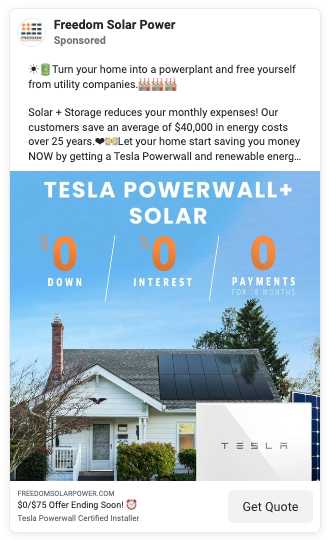
Here's an example of a solar lead generation ad on Facebook:
Native advertising
We won't cover native ads in detail here, but many lead generation companies use native advertising.
This involves buying up space on publisher content (like newspapers or news sites) that feels "native" to their surroundings. They often have an editorial tone and can drive large volumes of traffic.
2. Drive potential customers to a high performing landing page
It's not enough to spin up some campaigns and send them to your homepage.
You need a high-converting landing page built for the job.
The top 3 characteristics of a high converting solar landing page we've noticed are:
A strong, relevant headline: make sure your headline is clear and catches the eye.
The headline should hook the reader in, whilst the subheader reassures and gives more information. Your header should be highly relevant to the user's search, so they know they're in the right place and don't "bounce".
A well-defined incentive: make it clear what the user will get in exchange for their information. In the solar industry, this is typically a free quote, but it could also be a calculation of savings or a consultation.
Minimal distractions: remove any links or elements that could take the user away from your offer.
This is why landing pages don't typically link to everything else on your website. You want to keep the user focused on converting.
Landing page builders like Unbounce and Leadpages let you build high-converting landing pages built on best practices.
3. Capture leads with a high-converting form
Now you've driven traffic to your landing page, it's time to capture those leads.
If you want a high conversion rate and low cost per lead, you need a carefully designed form.
We at Growform have put together a collection of best-practice lead gen forms, including a solar quote form.
Growform is a form builder designed to get you more leads, and is used by solar companies to qualify homeowners before they reach sales.
Some general tips to create a high converting solar lead gen form:
- Start with "low touch", non-personal information that will help you qualify the lead, like "How big is your roof?" or "Do you have a pitched or flat roof?"
- End with more personal information, and always provide a good reason for asking.
- Make it extremely clear what the benefit of filling in the form is (free quote or savings estimate are good examples).
Qualify and verify before the lead reaches sales
The fastest way to burn solar budget is to treat every submission as equal. Some entries are homeowners ready to talk financing and install timing, while others are renters, job seekers or people casually gathering information. Qualification logic exists to separate those groups before the sales team spends time chasing them.
A useful funnel does not ask more, it asks smarter. If a prospect says they do not own the home, do not push them deeper into install questions. If they are outside your service area, the form should exit cleanly or offer a lighter next step instead of clogging the CRM with records that will never convert. In Growform that is conditional logic with a disqualification ending.
Phone and email checks should happen before routing, not after the rep has already called three times. Twilio phone lookups and email validation through ZeroBounce catch dead numbers and fake addresses while the homeowner can still correct them, and the phone verification guide shows how to do it without wrecking completion rates.
Capture the source and the consent at the same moment. UTMs and click IDs belong in hidden fields so they reach the CRM or buyer with the lead, and a TrustedForm or Jornaya certificate carries proof of opt-in when leads are sold, shared or reviewed later. Consent rules for calls and texts are set out in our TCPA guide.
4. Send your leads over
With your first lead collected, you need to send it over to your CRM or dialler.
If you're using a form builder like ours, you can post each lead by webhook or connect to more than 7,000 apps through Zapier.
Or, if you're generating solar leads for sale, you can distribute them using a tool like LeadByte or Databowl.
Exclusive leads, shared leads and internal sales leads shouldn't all follow the same path. Exclusive submissions can go straight into a CRM like HubSpot, or Salesforce through Zapier, with an alert to the assigned rep. Records meant for buyers go to a lead distribution platform, which decides who receives them. Keep the payload consistent, with the same field names, qualification answers and consent certificate passed every time.
Instant email alerts still matter because reps don't always live inside the CRM. The alert should carry enough context to act, including the source, the contact details and the qualification answers that show whether the lead is ready now or needs a slower follow-up.
5. Rinse, repeat and track
Now that you've got the ball rolling, it's time to rinse and repeat.
The most important thing is to track your progress, so you can see what's working, what isn't and where you need to make changes.
You should use UTM tracking to understand where leads are coming from.
Then, you can double down on the campaigns that work.
This is easier than it sounds.
Settings in the ad networks let you automatically add UTM tags to your URLs, and you can then pass them as a hidden field into your form builder.
Track more than cost per lead. Conversion rate by channel, cost per close and the share of leads that pass verification tell you whether a problem sits in acquisition, qualification or delivery. Test one thing at a time, such as a shorter versus a longer qualification path or a phone-first versus a form-first CTA, so you know which change moved the result.
Solar lead generation FAQs
How do I know if a lead is qualified?
A lead should at least be real and contactable, and should be in a good position to buy and benefit from the equipment.
If your leads aren't picking up, never seem to have enough money or can't justify the price of installing solar panels, they need to be more qualified.
How do I follow up on leads?
First, it's important to make sure your customer is expecting a call from you.
This can be done by sending an email immediately, or on the "thank you" page of the form.
Second, contact your leads quickly.
The gold standard is to contact customers within 5 minutes of the initial enquiry. SolarReviews reports contact rates of 80-85 % when installers call immediately.
You'll see lower conversion rates as the hours and days drag on.
A good follow-up phone script will ensure the customer says "Yes" to most questions (rather than open-ended responses) at first, followed by the efficient setting of an appointment.
You should also be well-practiced in confidently handling the most common objections ("It's too expensive", "it'll look ugly", etc).
What are the best tools for solar lead generation?
- For high-converting multi-step forms: Growform (that's us).
- To distribute leads: Zapier, Databowl and LeadByte.
- For building landing pages: Unbounce, Leadpages, Instapage.
- When designing ads: Canva.
What types of leads are best?
The "best" leads are highly qualified, highly motivated and exclusive to you.
However, these leads will also be the most expensive, so may not be best for your company.
If you're very price-competitive, non-exclusive/comparison leads might work well for you, as you can get the leads at a fraction of the price but "win" the deal most times.
Or, perhaps you have plenty of time and an efficient call center?
In this case, it may be cheaper to buy less qualified leads and do the qualification on your side, while other buyers pay the premium for more qualified leads.
How do I choose the best solar lead generation company?
A good solar lead generation company will be perfectly transparent in the way they generate leads (usually through a blend of Facebook, Google, Display and Native), rather than spammy practices like cold calling or bulk emails.
Aside from transparency, look for positive reviews on the website, good customer service and a strong specialism in the solar industry.
Introducing Growform: the form builder for solar lead generation
It's hard to generate leads for solar panel installation.
Visitors are more distracted than ever, and will bounce off your page as soon as they see a complicated form.
Growform lets you build forms like this:
The tool is used by solar companies across the world to generate more leads from the same traffic, and is designed to improve conversion rates significantly.
It comes with a 14-day free trial with no credit card required. Start free trial
Related articles

6 Best Form Builders for ClickFunnels Lead Funnels
September 30, 2026

7 Best Quiz Builders for Lead Qualification Funnels
Paid traffic lead funnels rarely fail because the quiz looked boring.
September 30, 2026

Typeform Free Plan Limits That Hurt Lead Gen Teams
Typeform’s free tier sounds generous at first because you can build unlimited forms, but lead gen teams usually run into the real constraint almost immediately: responses. Growform, a no-code multi-step form builder made for lead capture and qualification, sits in this conversation because teams comparing Typeform alternatives are often not asking about surveys at all….
September 30, 2026