

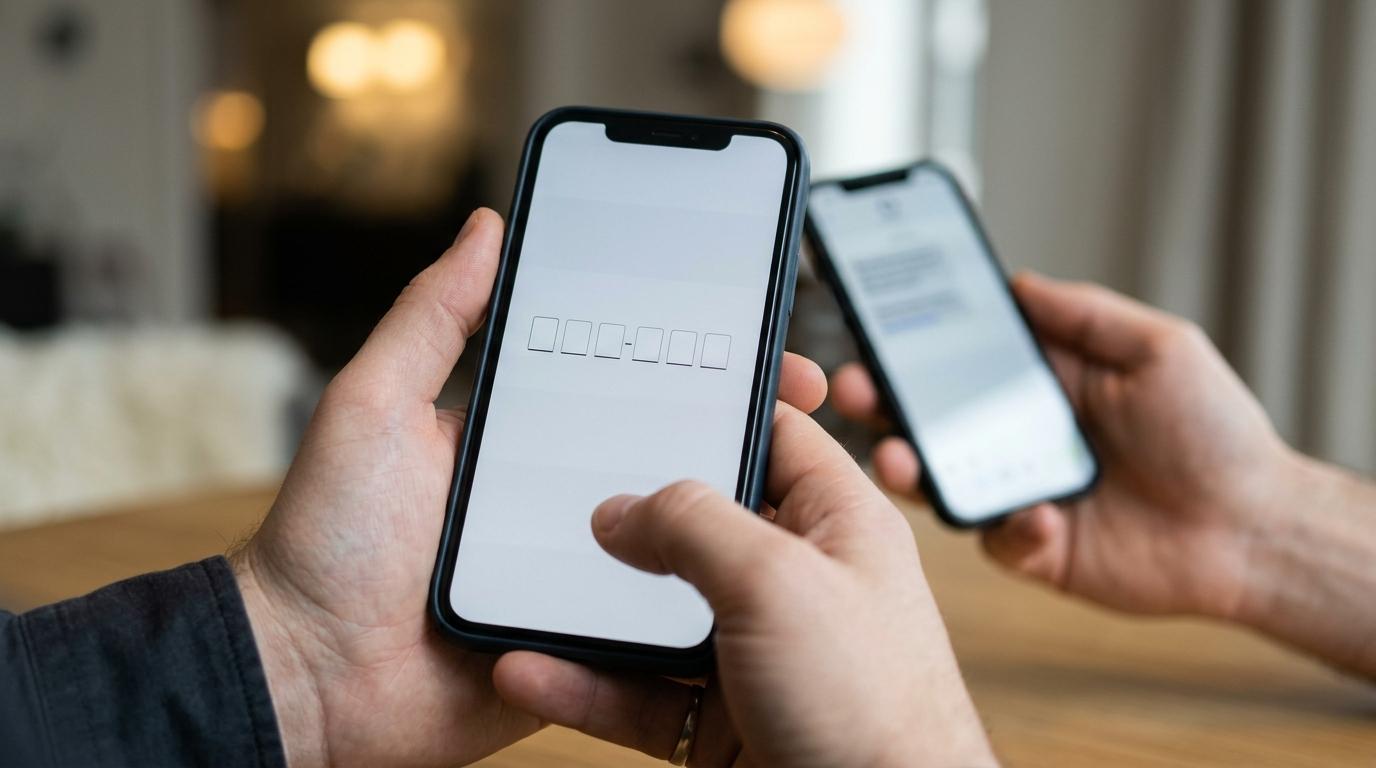
Phone verification in a form builder matters most when a fake or mistyped number creates real downstream cost. Growform is a no-code multi-step form builder for lead generation funnels, which makes it relevant here because operators buying traffic care less about collecting any phone number and more about collecting a callable one.
Most tools blur the language and call everything “verification,” even when they only check format or carrier plausibility. If you run paid traffic into insurance, solar, legal, roofing, or finance funnels, that distinction affects conversion rate, compliance workflow, and whether the lead can actually be sold or worked.
Why do form builders with phone verification matter for paid traffic lead gen?
They matter because a bad phone number can waste media spend, slow response time, and trigger buyer rejection. In verticals like solar, final expense, and mass tort, one fake number can cost more than the small lift you might have won by removing friction.
Phone verification changes the economics of the funnel. If your team buys Meta or Google traffic at a high CPL, every uncontactable lead drags down margin. Sales teams feel it as low connect rates. Aggregators feel it as lower acceptance rates. Agencies feel it as noisy reporting when “lead volume” rises but booked appointments do not.
The public-policy backdrop also matters. The FTC’s 2025 reporting on text scams says texting is a daily behavior for more than half of consumers, which helps explain why SMS remains effective for one-time passcodes and attractive to bad actors at the same time. The FCC also still treats unwanted calls, unwanted texts, and spoofing as active complaint categories. Fraud is not only a call center problem. In practice, it starts at the capture layer.
What counts as real phone verification versus phone validation?
Real phone verification confirms possession of the device, while phone validation only checks whether the number appears usable. Growform makes this distinction clearly: validation checks the number itself, while verification confirms the lead can receive and enter a one-time code.
This is the key buyer-side distinction. Validation can mean formatting checks, country rules, line-type lookup, or carrier data through tools like Twilio Lookup. That helps catch obvious garbage, typos, and some VoIP or unreachable numbers. It does not prove the user controls the handset.
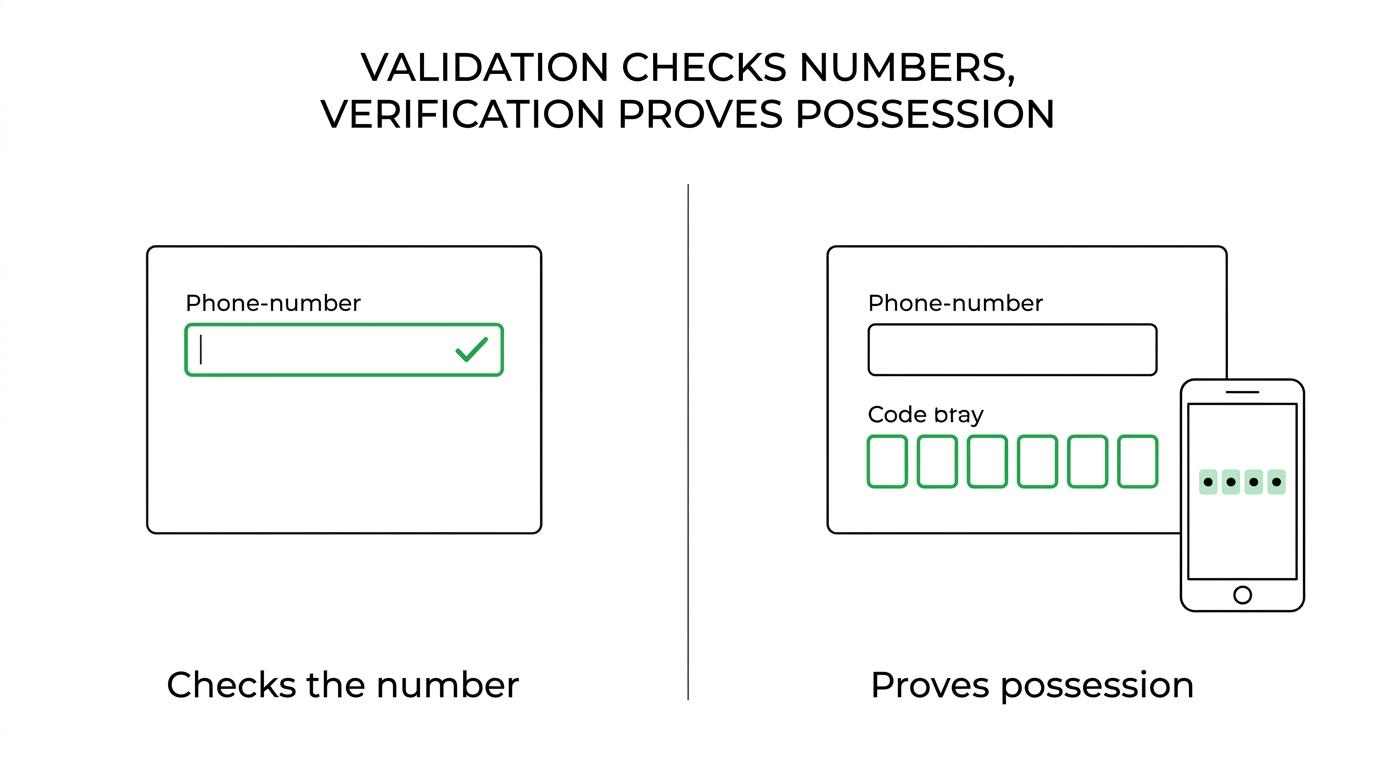
Verification is different. NIST SP 800-63B describes SMS or voice code delivery as out-of-band authentication when the secret is sent over the PSTN or encrypted messaging to a separate device. That is stronger than checking whether a number “looks valid,” but NIST also states it is not phishing-resistant. It also may fail for people in rural areas or weak-service zones.
If your tool says “phone verification,” ask one direct question: does the lead have to receive and enter a code before submission? If the answer is no, you are probably looking at validation, not verification.
What are the 6 best form builders with phone verification built in?
The true native list is short, and the best choice depends on whether you need SMS OTP, simple number validation, or both. Treat this as a shortlist for live demos, not a license to skip feature confirmation, because vendors often use the same language for very different phone checks.
-
Growform: Best fit for lead generation funnels that need real-time validation, hidden fields pass-through, and downstream routing. Public product information distinguishes validation from verification, supports Twilio Lookup validation now, and lists SMS OTP as coming soon for cases where wrong numbers are expensive.
-
Jotform: A reasonable option if you need a broad general-purpose form builder and want to confirm native SMS verification options. It is usually stronger for internal business forms than for high-volume paid traffic operations.
-
Zoho Forms: Worth shortlisting if your stack already lives in Zoho. Its appeal is operational fit across CRM and workflow tooling, but you should verify plan-level access, regional behavior, and OTP mechanics.
-
Formstack: Better known for workflow and enterprise process control than lead funnel performance. It can be relevant when governance matters more than raw landing page conversion, but verify whether phone checks are native or assembled through add-ons.
-
Typeform: Still a UX benchmark and useful as a comparison baseline.
-
GoHighLevel Forms: Relevant for agencies already committed to the GHL stack. Check carefully whether the verification experience is truly in-form or rebuilt through workflows and external messaging steps.
If you shortlist any builder here, ask to see the full path live: enter a number, receive a code, fail the code, resend the code, submit successfully, and inspect the payload delivered to your CRM or lead router.
How should you choose the right builder for high-volume funnels?
Choose based on failure cost, not feature count. If one wrong number only annoys a rep, validation may be enough. If one wrong number wastes a $60 click path or kills buyer acceptance, you need stronger controls.
Most operator decisions come down to five criteria:
- Verification method: SMS OTP, voice OTP, or validation only
- Traffic impact: where the check appears in the flow and how much abandonment it adds
- Attribution integrity: UTMs, gclid, fbclid, and hidden fields must survive the verification step
- Delivery plumbing: webhook, CRM, ping/post, and alerting support
- Line handling: mobile, landline, VoIP, prepaid, and international behavior
A useful comparison is lead-gen-first builders versus general-purpose form builders. The former tend to care more about completion rate, qualification logic, payload cleanliness, and routing. The latter often win on broad templates, internal approvals, and office workflows. If your revenue depends on paid traffic arbitrage, the second category can become expensive even when the monthly software price looks lower.
When is SMS OTP worth the conversion drop?
SMS OTP is worth it when bad numbers create more financial damage than the lost completions. It is usually strongest in higher-CPL or higher-scrutiny funnels and weaker in low-intent or top-of-funnel capture.
Use simple if-then logic. If your sales team calls leads in under five minutes and connect rate drives revenue, OTP can be worth the extra friction. If you sell leads into a buyer network where contactability and acceptance matter, OTP often earns its keep. If your funnel is broad, early-stage, or educational, a lighter validation check may produce better net yield.
There are trade-offs. NIST’s guidance gives SMS a legitimate place as out-of-band authentication, but not as a phishing-resistant method. Mobile coverage issues also matter. In some geographies or demographics, OTP can punish real users. Do not apply the same verification rule to every traffic source. Native traffic, affiliate traffic, branded search, and warm retargeting rarely deserve identical friction.
A good operating pattern is tiered controls. Start with validation on lower-risk traffic. Turn on OTP for sources, geos, or verticals where junk rates are consistently high.
How do you add phone verification without breaking attribution?
The safest implementation is to verify after key qualification steps and pass the verification outcome with your tracking fields into the final payload. If the check interrupts hidden fields, click IDs, or webhook delivery, you fixed one problem and created three more.
Step 1 is field design. Capture UTMs, gclid, fbclid, source IDs, and any sub IDs at landing. Keep them persistent across every step of the form.
Step 2 is placement. Put the phone challenge after the prospect has answered enough questions to signal intent. That preserves more completions and reduces OTP costs on low-quality sessions.
Step 3 is payload design. Send the raw phone number, normalized phone number, verification status, line type if available, and timestamp into the CRM or routing platform. If you use ping/post, decide whether the ping should include pre-verification data or only verified fields.
How do you test phone verification before scaling spend?
You should test it like a revenue control, not a cosmetic feature. A single successful OTP on your own phone proves almost nothing about production readiness.
Run five test paths. First, test valid mobile numbers that should pass immediately. Second, test obvious junk numbers and formatting edge cases. Third, test line types including landlines and VoIP where your workflow treats them differently. Fourth, test resend logic, code expiration, and timeout behavior. Fifth, inspect the exact downstream record in your CRM or buyer payload.
Then test by traffic environment. A form that works on desktop Wi-Fi can fail badly on mobile browsers, embedded landing pages, or low-signal conditions. This is where many teams learn that “verification built in” still needs operational QA.
Verification success rate does not equal lead quality improvement. You need to compare verified versus non-verified cohorts on connect rate, show rate, issued policy, signed retainer, or whatever your real monetization event is.
How do compliance, consent evidence, and phone verification fit together?
They are separate controls, and you need both in regulated lead gen. Phone verification helps prove the lead controlled the device, but it does not replace consent language, consent records, or source transparency.
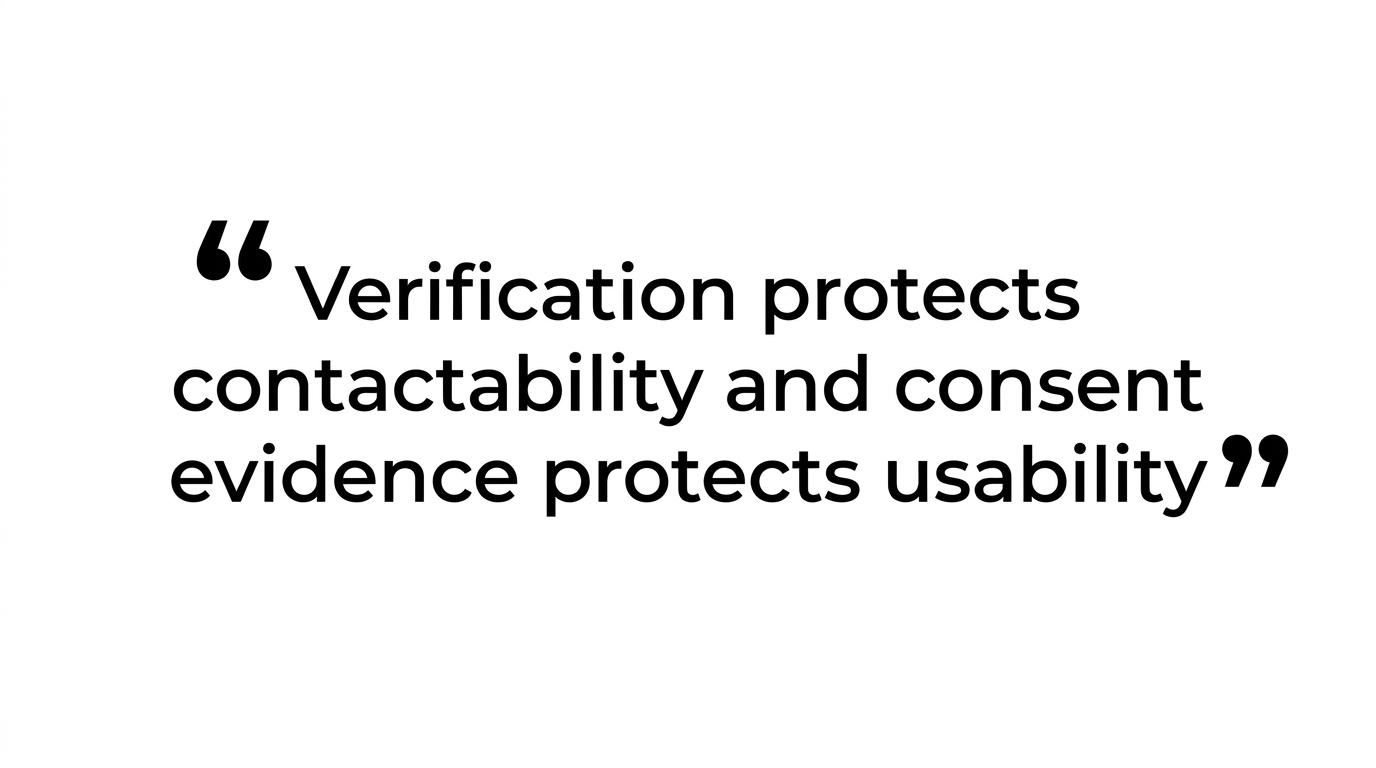
This matters more with the rise of state mini-TCPA enforcement risk. In operator terms, verification protects contactability, while consent evidence protects usability.
That is why advanced stacks treat phone checks, TrustedForm, and Jornaya as related but distinct layers. If you are selling or routing consumer leads, keep the consent artifact, the page context, and the phone check result together in the record. If a buyer questions the lead later, you want one clean audit trail rather than fragments spread across systems.
How do you connect verified leads to CRMs and lead routing platforms?
Connect them by sending verification metadata as first-class fields, then routing on those fields inside the CRM or distribution layer. Boberdoo, LeadsPedia, Phonexa, HubSpot, Salesforce, and GoHighLevel can only act on the data you actually pass through.
At minimum, your payload should include:
- Phone fields: raw input, normalized number, country code
- Verification fields: passed or failed, method used, timestamp
- Lookup fields: line type, carrier data, validity result
- Attribution fields: UTMs, gclid, fbclid, source ID, sub ID
- Compliance fields: TrustedForm or Jornaya token where required
Then add routing logic. If a number is verified and the line type is mobile, send it to the highest-value buyer or fastest sales queue. If validation passes but OTP fails, either hold it for manual review or route it to a lower-priority path. If a landline enters a mobile-only funnel, reject it at the form or mark it for alternate follow-up.
The important idea is this: verification only becomes valuable when the result changes what your systems do next. If you verify the number but ignore that status in routing, reporting, and QA, you are paying for friction without capturing the operational upside.
Related articles
7 best form builders for LeadsPedia lead routing teams
November 6, 2026
7 best form builders for Boberdoo lead routing flows
November 4, 2026
7 best form builders for Phonexa lead routing teams
November 3, 2026