


The best qualification question isn't always the first one. Asking for budget, company size, or purchase authority before a visitor understands why the conversation matters can reduce completion without giving sales useful context. A strong funnel establishes need, urgency, eligibility, authority, financial capacity, engagement, alternatives, and attribution in an order that feels natural, then uses conditional logic so every visitor doesn't face the same interrogation.
That balance matters because form abandonment has remained structurally high. Widely cited research places abandonment at about 67.5% for people who start a form, and a 2018 survey by The Manifest found that 81% of people have abandoned an online form after starting it. Every unnecessary question adds friction, particularly on mobile and in paid acquisition funnels.
The answer isn't to remove qualification. It's to treat qualification as a sequence-design problem. Ask a low-friction question first, capture intent, reveal the next relevant question, and route the submission according to the answer. Growform gives marketers a no-code way to build multi-step forms and quiz flows, apply disqualification rules, preserve attribution, and deliver leads in real time. Here are the eight decisions your lead qualification questions should enable.
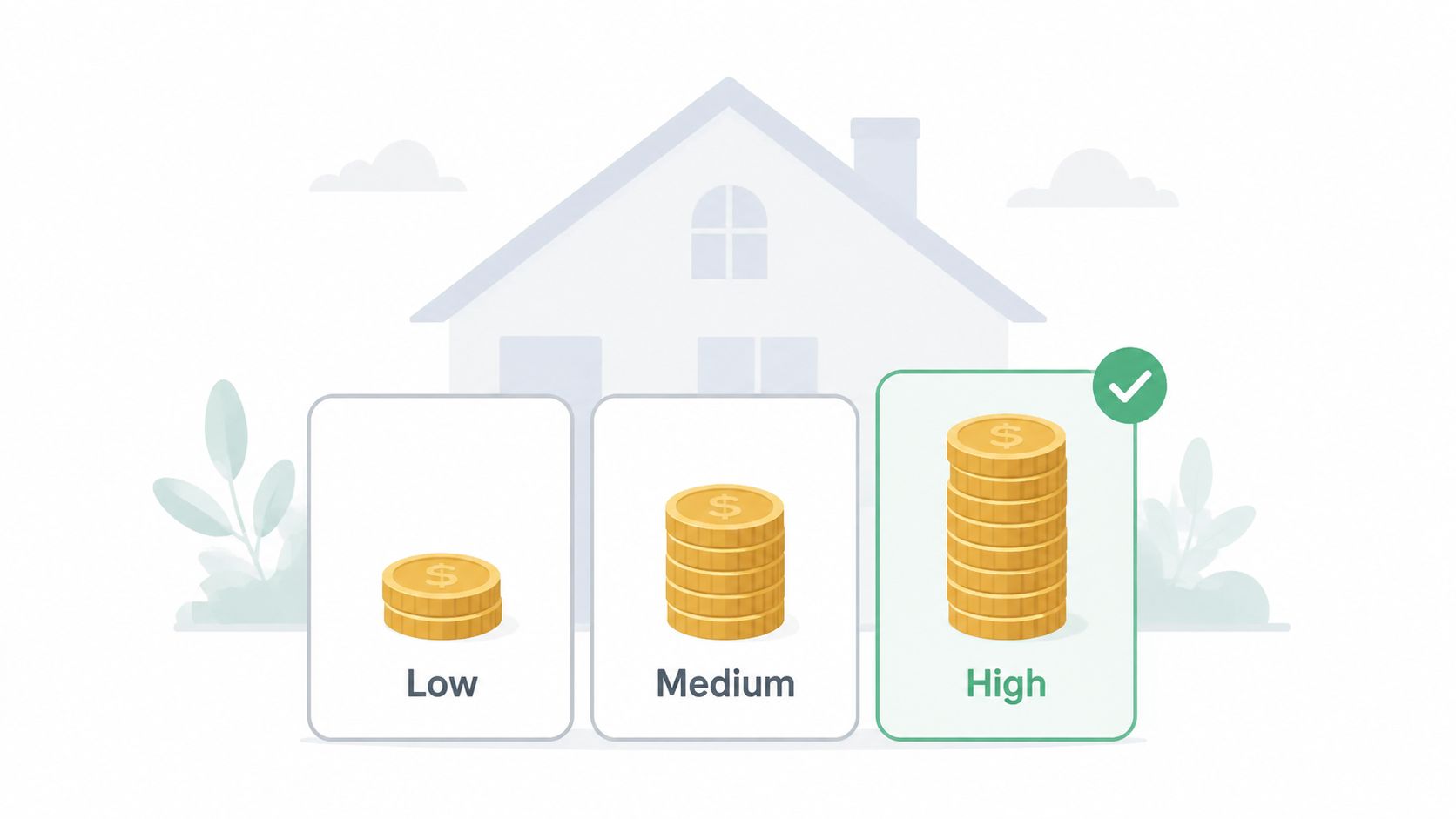
1. Budget and financial capacity
Budget questions help determine whether a prospect can realistically move forward, but they're easy to ask badly. “What's your budget?” sounds like a demand for sensitive information before the visitor has received enough value. A better approach frames the question around an investment range, funding path, or approval process.
For a solar funnel, you might ask which home-improvement investment range feels realistic. A mortgage form could ask whether the visitor is already pre-approved or actively seeking financing. In legal lead generation, the financial question may be indirect, with the form first establishing whether the person is considering legal action and whether the case fits the service. For home services, combine an approximate project range with the desired start date rather than treating budget as an isolated gate.
Place this question after need and early urgency signals, often around the middle of a multi-step flow. The lead qualification overview from Growform explains why qualification should connect the information captured to the next sales action, rather than collect fields without a routing purpose.
Ask about buying reality, not just a number
A prospect may not know the final price, especially in custom services. Ask questions such as:
- Funding path: “How would this purchase typically be approved or funded?”
- Investment range: “Which range best matches what you're considering?”
- Financial readiness: “Have you set aside funds, secured financing, or are you still researching options?”
These answers distinguish an active buying process from casual interest without forcing a binary budget declaration.
Use conditional logic to show the budget branch only after the visitor indicates a relevant need or near-term timeline. A lead who selects “just exploring” can enter a nurture path with educational content. Someone who reports a current problem and an immediate start date can receive the budget question and, if aligned, route directly to sales.
2. Authority and decision-making power
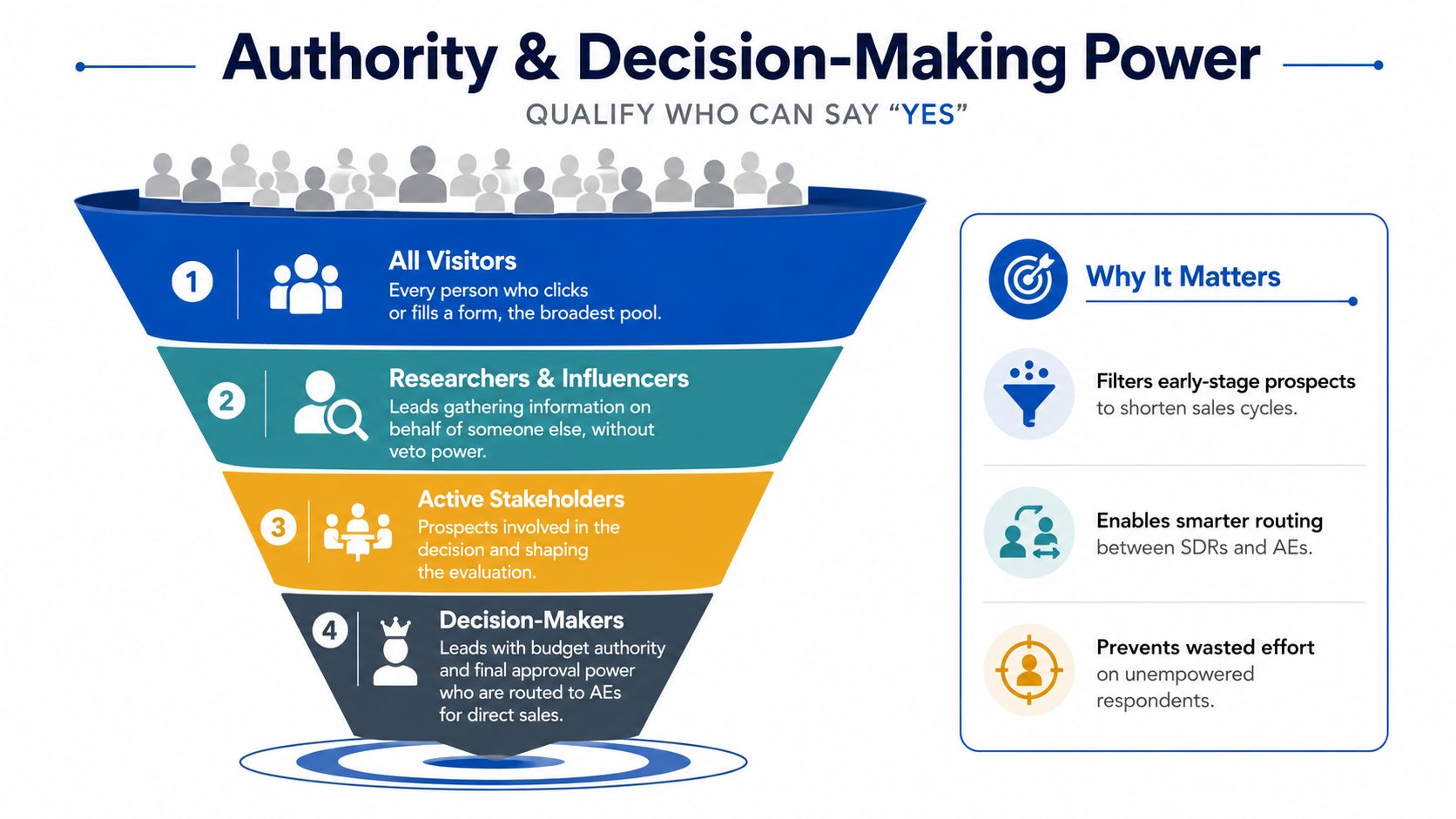
A form respondent can be interested, informed, and still unable to approve a purchase. Authority questions identify whether the person makes the decision, influences it, or is gathering information for someone else. That distinction changes the follow-up, the sales owner, and the next question.
Ask, “How involved will you be in choosing a solution?” This feels less confrontational than “Are you the decision-maker?” and gives you useful choices such as final approver, part of the buying team, recommender, or researching on someone else's behalf. A GoHighLevel agency might ask whether the respondent owns the business or manages marketing for it. A home-improvement funnel can distinguish the homeowner with budget authority from a family member collecting estimates.
Ask about involvement early, often in the first or second step, but don't use it as an unnecessary gate. A researcher may still be valuable if the form captures the person who controls the decision. The practical objective is to create a path to that person, not just reject the initial contact.
Turn involvement into routing
Authority answers should trigger different actions:
- Final approver: Route to a direct sales representative and request a meeting.
- Buying-team member: Ask who else should attend or review the recommendation.
- Researcher: Offer useful information and request an introduction to the budget owner.
Pair authority with role, company, or property information where it improves segmentation. Hidden fields can preserve known details from ad campaigns or CRM records, reducing the need to ask the visitor for information you already have. In a mortgage or insurance funnel, the respondent may be the consumer. In an agency funnel, the respondent may represent a client, so the appropriate sales conversation differs.
Ask for the person's role in the decision, then make it easy for them to bring the right person into the process.
A non-decision-maker shouldn't automatically enter a low-priority queue. If they report a pressing problem and a near-term timeline, route them to a sales-assisted path with a prompt to include the final approver. If they're only gathering general information, nurture them without assigning immediate sales capacity.
3. Need and problem fit
The most useful need question makes the prospect describe the problem in their own terms. “What are you looking for?” often produces vague answers. “Which issue are you trying to solve?” gives the form enough structure to identify fit while still allowing the visitor to recognize their situation.
Start with a broad multiple-choice question, then branch into specifics. A solar funnel might ask whether the visitor is dealing with high electricity bills, an aging system, or a desire to reduce environmental impact. A mortgage form could distinguish a home purchase, refinance, cash-out request, or debt consolidation. A legal funnel needs to identify the relevant incident or case category before it routes the lead to a specialist.
The order matters. Begin with the existence of a problem, then ask what it is, then ask what happens if it remains unresolved. This sequence separates an active need from a visitor who clicked an ad out of curiosity. It also gives the sales representative a usable opening for the first conversation.
Capture specificity without creating a wall of fields
Use one clear question per step and let the next choice depend on the answer. If a homeowner selects an emergency HVAC issue, show service-location and contactability questions. If they select future planning, ask about the intended season or project stage instead of forcing emergency-service details.
Useful follow-ups include:
- Problem category: “Which of these best describes what you need help with?”
- Current solution: “How are you handling this today?”
- Consequence: “What's the biggest issue if nothing changes?”
- Desired outcome: “What would a successful solution help you achieve?”
Two or three focused questions can produce stronger signal than a long demographic form. Dynamic scoring can prioritize a lead whose answers show a specific, costly, or urgent problem, while sending a general information request to nurture.
The lead shouldn't need to understand your internal qualification framework. The form should feel like a short path to a relevant recommendation.
4. Timeline and urgency
Timeline tells you when a qualified need can become a sales opportunity. A visitor who wants a service this week requires a different experience from someone planning a project far in the future, even if both have the same problem and budget.
Use concrete time ranges rather than asking, “How soon?” A solar form might offer this month, the next few months, later this year, or still exploring. A mortgage form can ask when the prospect hopes to close. An HVAC funnel should separate emergency repair from a planned replacement. A legal form might ask whether the visitor has already filed a claim, is preparing to do so, or is still deciding.
Ask about need and timeline near the beginning because the combination creates an early temperature signal. If the visitor reports no current problem and no defined timeframe, don't force detailed product questions. Move them to education or a lighter nurture path.
Match urgency to the operating model
Timeline answers should change more than a lead score. They should affect ownership, response channel, and follow-up timing.
- Immediate need: Send an alert to the appropriate salesperson or service team.
- Near-term project: Create a task for prompt contact and include the selected timeframe in the CRM.
- Longer-term planning: Place the lead in a relevant nurture sequence with a future check-in.
- Unclear timing: Ask one clarifying question about the event that would trigger action.
Don't treat a distant timeline as a permanent disqualification. Circumstances change, and a future prospect can become valuable when a renewal, move, repair, financing deadline, or internal initiative creates urgency. Keep the answer available to sales so representatives don't use an aggressive follow-up cadence with someone who explicitly selected long-term planning.

If your business sells leads, timeline can also help separate buyer demand. If your team sells appointments, it can determine whether the lead belongs in an immediate booking flow or a longer sales cycle.
5. Lead source and attribution clarity
Attribution isn't always a question the visitor answers. It's qualification context that your funnel should capture automatically, because the source often explains why a lead behaves differently and which campaign deserves more budget.
A solar marketer may need to distinguish awareness traffic from branded search. A lead aggregator may need source, sub-ID, click ID, and campaign details for routing and settlement. A GoHighLevel agency should preserve the client, campaign, and medium values through the embedded form so the downstream team can connect a submission to the correct promotion.
Manual source questions create inaccurate answers and add friction. Use hidden fields and persistent UTM capture for values such as utm_source, utm_medium, utm_campaign, utm_content, gclid, fbclid, and a network-specific click ID. The data should remain attached as the visitor moves through a multi-step flow and should arrive intact in the CRM or buyer payload.
Use attribution to improve qualification rules
Clean source data lets you compare the full funnel, not just cost per lead. Track the path from ad click to submission, accepted lead, contacted lead, appointment, and sale. A channel that generates inexpensive submissions may still perform poorly if the answers show weak intent or the buyer rejects the leads.
For regulated verticals, source context can support internal review and consent documentation. For agencies, including campaign context in real-time alerts gives sales a better opening. A representative can prepare for a roofing lead from a storm-damage campaign differently from a visitor responding to a general home-improvement promotion.
Campaign attribution in Growform covers the role of hidden fields and source tracking in preserving this context.
Don't use attribution as a reason to ask the visitor how they found you unless you're troubleshooting a gap. Capture it, validate it in your CRM, and connect it to the outcomes your business values.
6. Engagement level and motivation
Intent isn't the same as a positive answer to “Are you interested?” Engagement appears in the effort a prospect has already made. Someone who has compared providers, checked financing, gathered documents, or spoken with an installer needs a different follow-up from someone who clicked an introductory ad.
Build a short engagement sequence rather than one intrusive motivation question. For solar, ask whether the visitor has received quotes from other installers. For mortgages, ask whether they've checked credit, started pre-approval, or contacted lenders. For home services, ask what prompted the search, with options such as an emergency, a planned project, a competitor promotion, or a decision to act now.
The form can score these answers alongside need and timeline, but keep the model explainable. Sales should know why a lead was marked urgent, not receive an opaque score that no one trusts.
Let engagement change the experience
A motivated visitor should reach a direct sales path quickly. A less engaged visitor may need more context before a call request feels appropriate.
- Active research: Ask what options they're comparing and route to a consultative follow-up.
- Completed preparation: Request the next relevant detail, such as location, project type, or financing stage.
- Early exploration: Offer educational content and a softer conversion step.
- Strong urgency: Trigger immediate notification when the business can respond promptly.
Use progress indicators and concise copy to preserve momentum, especially when the funnel needs several qualifying stages. Don't add engagement questions just because they're interesting. Keep a question only if its answer changes routing, follow-up, scoring, or the next branch.
A practical validation loop connects the engagement label to accepted leads, booked conversations, and sales outcomes. If the “high engagement” group behaves no differently from the general pool, simplify the score or replace the signal. Qualification models should earn their place through operational usefulness.
7. Eligibility and compliance verification
Eligibility questions protect both the prospect and the business from an unsuitable handoff. They confirm that the service is available, the case fits the relevant rules, and the lead can legally or operationally enter the sales process.
Location is often decisive. A legal funnel may need the visitor's state and case category. An insurance form may need age and jurisdiction. A lead-generation business also needs to distinguish a new prospect from an existing customer before selling or routing the submission.
Explain why you're asking. “This form checks whether the service is available in your area” is clearer than presenting an unexplained jurisdiction gate. When a prospect is ineligible, show a direct message and, where appropriate, offer a waitlist, alternative service, or general resource.
Treat consent evidence as part of qualification
Contactability and consent belong in the capture design, not as an afterthought. Phone and email verification can reduce fake or unreachable submissions. In regulated verticals, consent records should travel with the lead so sales teams, buyers, and compliance reviewers can understand what was agreed to and when.
The Growform TCPA compliance checklist provides a practical reference for organizing consent capture and documentation. Use the relevant compliance process for your vertical and jurisdiction, and have qualified legal counsel review requirements that apply to your campaigns.

Build separate outcomes for eligible, ineligible, duplicate, and unverified submissions. An ineligible answer shouldn't reach a salesperson who has no permitted or suitable offer. A verified, eligible lead should move immediately to the correct CRM queue or buyer route with the qualification answers attached.
8. Competitive positioning and alternative awareness
The alternatives question reveals the prospect's decision context. They may be comparing competitors, considering an internal solution, planning to do the work themselves, or deciding whether to act at all. Each situation calls for different positioning and follow-up.
Ask positively: “Which solutions are you considering?” A roofing funnel can distinguish other contractors from DIY and no decision. A mortgage form might ask how many lenders the applicant is currently evaluating. A solar prospect who's comparing quotes needs a different conversation from someone who has only started learning about installation.
Use multi-select when prospects can consider several options. The answer can inform sales preparation, content, and product decisions without turning the form into a competitor survey. Don't ask the question to provoke a defensive response or force the visitor to name a competitor.
Connect alternatives to action
The most useful combinations involve alternative awareness, timeline, and fit:
- Comparing providers and ready soon: Route to a fast, sales-led follow-up with clear differentiation.
- Considering a competitor but lacking urgency: Send comparison content and a lower-pressure nurture sequence.
- Evaluating DIY: Explain service scope, risk reduction, and support without attacking the alternative.
- Still researching: Capture the category need and offer the next educational step.
A visitor who names a competitor isn't automatically more qualified. They may be actively shopping, or they may be collecting general information. Treat alternative awareness as a signal that needs context, then combine it with the problem, timeline, and authority answers.
Use competitive answers to prepare the sales conversation, not to overload the form with product claims.
Turn answers into better routing, not longer forms
The strongest form doesn't ask all eight questions in a fixed sequence. It asks the smallest set that enables the next decision. Start with need and timeline, because a current problem with a clear timeframe gives you an early indication of intent. Establish eligibility before sending the lead to a team that can't serve it. Then branch into vertical-specific details, such as property information for solar, case details for legal, location for home services, or financing context for mortgages.
Ask about authority once the form has established a reason for the conversation. That makes the question feel relevant and helps you identify the right participant in the buying process. Use engagement and alternative awareness to distinguish active evaluation from early research. Ask about budget when the prospect has demonstrated enough need or urgency for the answer to be meaningful, rather than placing a sensitive financial question at the entrance.
Each answer should map to a clear action:
- Qualify: The lead meets the basic fit and intent requirements.
- Disqualify: The service, location, timing, or eligibility does not match.
- Nurture: The lead may fit later but isn't ready for immediate sales attention.
- Prioritize: The lead shows stronger urgency, engagement, or buying progress.
- Route: The submission belongs with a specific salesperson, partner, buyer, or workflow.
Measure more than completion rate. Form abandonment matters because every unfinished submission is lost acquisition value, and conversion declines steadily as field count rises, roughly halving between three fields and ten or more. Splitting questions across two to three steps recovers part of that loss, with stronger gains on longer qualification flows when a progress indicator is visible. Treat those patterns as directional, then test your own audience, traffic source, device mix, and vertical.
Speed after capture also affects the value of qualification. A Harvard Business Review study of 2,241 US firms found that companies that tried to contact a lead within an hour were nearly seven times as likely to qualify it as those that waited longer. Better questions can't compensate for a slow handoff. Send qualified submissions to the right destination immediately, with the answers, source data, consent evidence, and verification status attached.
Growform can support that workflow through multi-step and quiz-style lead qualification forms, conditional logic, disqualification, hidden-field attribution, verification integrations, and real-time delivery to downstream systems. Build the shortest flow that produces a defensible routing decision, then improve it by comparing completion, accepted-lead quality, contactability, appointments, and revenue.
Start free trial to build a multi-step lead-generation funnel that asks qualification questions progressively, disqualifies poor-fit submissions, preserves attribution, and sends eligible leads to your CRM or buyer in real time. Start by turning your current form into clear qualify, nurture, disqualify, prioritize, and route branches, then invite your sales team to review the handoff.
Related articles

7 Best Lead Routing Tools for Real-Time Lead Handoffs
October 13, 2026

Quiz Funnels vs Multi-Step Forms for Lead Generation
Paid traffic operators usually ask the wrong first question here.
September 30, 2026